Shadow Puppet Show
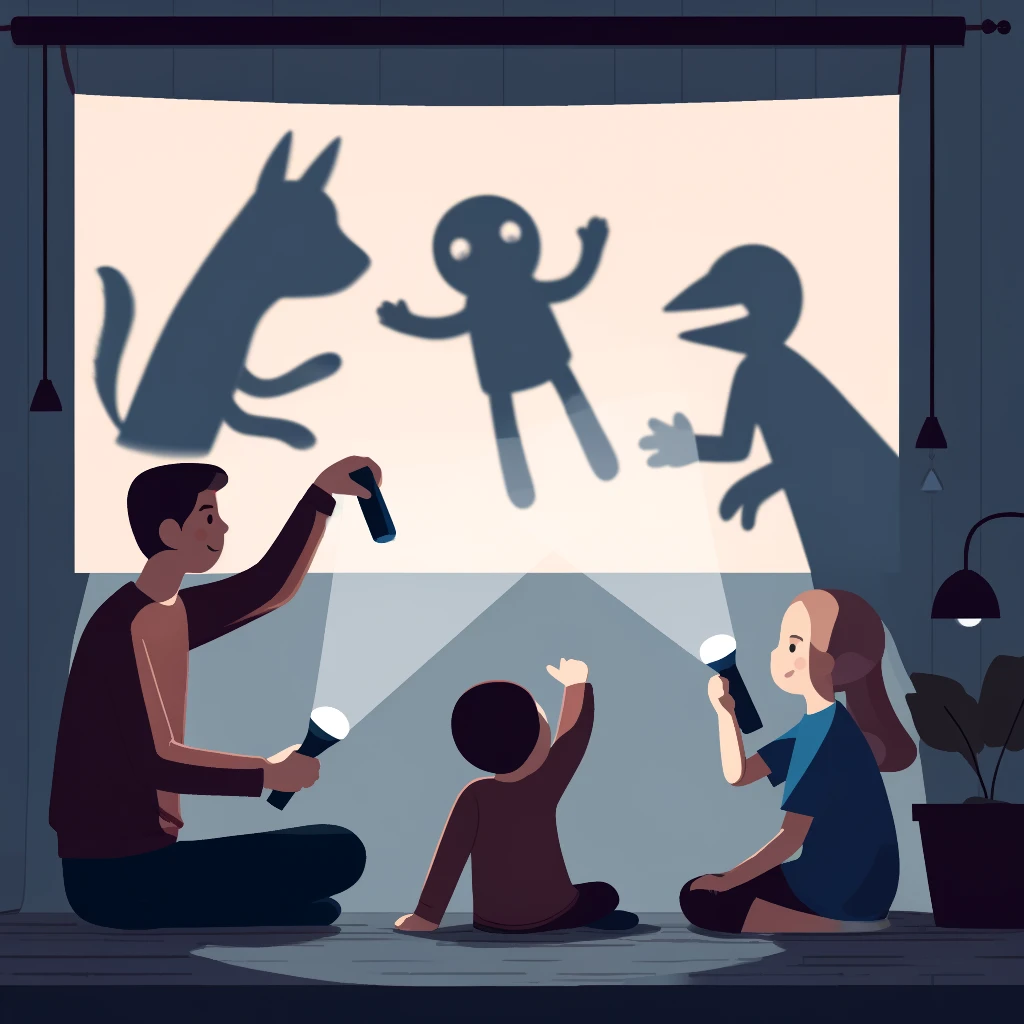
An hour that starts with hand shadows (the bird, the dog, the impossible rabbit) and builds to a proper card-puppet show behind a hung sheet — silhouettes cut from cereal boxes, taped to sticks, performing close to the screen where the magic is sharpest.
Last updated
Before you start
Shadow puppetry is the lowest-tech theatre in human history and it still beats the tablet on the right evening — a torch, a wall or a hung sheet, and the dark. Start with hands (the bird that flaps is everyone's first triumph; the dog that barks needs a thumb with ambition), then graduate to cut-card puppets, where a cereal-box silhouette with a stick taped on becomes anything the story requires.
The technical secret that separates crisp magic from grey mush: the puppet lives close to the screen, and the torch stays still. Puppet against the sheet is sharp; puppet drifting back toward the torch swells into fog. Give the torch a fixed post (a shelf, a taped position, a designated Torch Officer who takes it seriously) and every puppet instantly looks professional.
How it goes
Hand shadow academy
Lights off, torch fixed, and the classics taught in order of difficulty — the flapping bird (everyone succeeds immediately; morale secured), the dog with the opening mouth, the snail, the impossible rabbit that will haunt one adult all evening. Size-play is the first physics lesson — walking hands toward the torch makes giants, and the gasp is reliable.
The puppet workshop
Story first, loosely — three characters and a problem is a complete show. Silhouettes drawn bold on card (details vanish in shadow; profile beats face-on, and the hole-punched eye is worth ten drawn ones), cut by age-appropriate scissors with adult backup on the fiddly bits, sticks taped on at an angle so hands stay out of shot. One scenery piece — a tree, a castle wall, a wave — elevates the whole production.
Rehearsal
One run behind the screen — puppets close to the sheet, performers crouched, the Torch Officer holding position with military honour. Teach the one stagecraft move that matters — entering from the side, not appearing from nowhere — and the wobble-walk that makes a card puppet read as walking.
The show
Audience seated, lights announced OFF by whoever's youngest, and the story performed — five minutes is a full production. Voices from behind the sheet, sound effects from the audience if drafted. Applause in the dark, then the encore that always happens — the puppets taking bows, then hand shadows reclaiming the screen as the house lights stay down and everyone has one more go at the rabbit.
Make it fit your kids
Hand-shadow audience and beginner birds — their puppet gets made with them and operated with hands over hands. Front row for the show, sound-effects portfolio (the wind, the wolf's howl) fully theirs.
Full puppeteers — bold silhouettes, committed voices and strong opinions about the plot. The Torch Officer role, taken seriously, is a badge position here.
Production values arrive — jointed puppets (split pins at shoulders), layered scenery, a two-torch colour wash if the fleet allows. They'll run the show for younger siblings and direct it harder than you would.
The cinematic wing — filmed shadow shows with a phone, silhouette title cards, a score. The medium is aesthetic enough for their standards; the credit sequence proves it.
A torch you own, a sheet you own, cereal-box card and tape — the complete theatre costs nothing, which has been shadow puppetry's business model for two thousand years.
If it’s going really well
- The travelling theatre — sheet and torch pack flat; the show tours to grandparents with the puppets in an envelope.
- Shadow story cave — the same rig under the duvet or table for one-on-one bedtime shows, the format's softest use.
- A myth done properly — one traditional tale (shadow puppetry's home territory) researched and staged as the company's serious production.