Indoor Planetarium
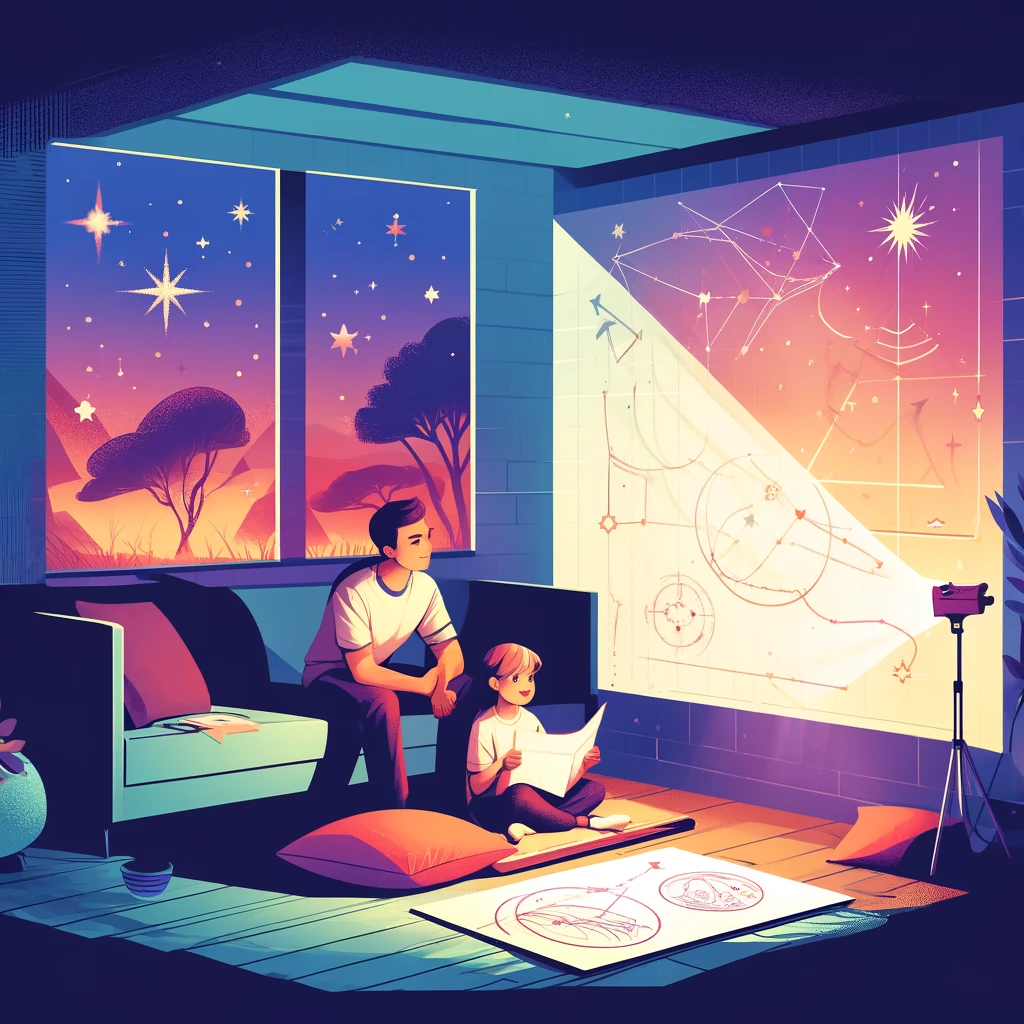
Half a day building a working pinhole planetarium — constellation discs punched into card or tin foil, projected by torch onto walls and ceilings in the darkest room — followed by the evening show, narrated by the astronomers who built it, myths included.
Last updated
Before you start
A torch shining through pinholes in card throws genuine constellations onto a ceiling, and building the projection discs is an afternoon of quiet punching, checking and myth-reading that pays off entirely at lights-out. Real star maps matter — print the genuine patterns (the Plough, Orion, Cassiopeia) because half the point is that the ceiling teaches the actual sky, and the family that's projected Orion finds him outside in seconds forever after.
The engineering note that saves frustration: fewer, bigger holes beat many small ones. A drawing pin makes stars; a pencil-tip hole makes bright stars; a disc riddled with pinpricks makes fog. Six to nine holes per constellation, faithful to the map, projected from a single-LED torch (phone torches work; multi-LED camping lights throw ghost images), in the darkest room the house owns.
How it goes
Mission briefing
Look at the real maps together and let each astronomer claim constellations — the Plough for beginners (seven stars, unmissable), Orion for glory (the belt does the work), Cassiopeia for the economy option (five stars, big W). Read each one's myth as it's claimed; the show needs a script and the myths are pre-written by several thousand years of other parents.
The punch works
Map under card, stars marked with a pencil dot, then punched — drawing pin for ordinary stars, pencil-twist for the bright ones (teach magnitude by hole size and it sticks weirdly well). Each disc gets tested against a lamp and labelled on its rim. Mistakes cost one piece of card; punch generously. Foil discs give crisper stars for older hands that can punch without tearing.
Observatory construction
The darkest room wins — blackout blinds are a gift, blanket-over-curtain-rail is the standard retrofit. Arrange the seating (all pillows on the floor, obviously), rig each torch with its elastic band, and rehearse the disc-swap in the light because doing it in the dark is the show's only technical hazard. Snacks staged; planetaria have concessions.
The show
Lights out, and the narrated tour — each astronomer projects their constellations onto the ceiling and tells its myth, torch steady or slowly drifting (drifting reads as the sky turning; accidental genius). Audience participation is pointing and gasping. Run the full programme, then freestyle — constellations invented and named by the household enter the family sky permanently ("The Biscuit" rises in the east). Finish with the promise attached — first clear night, the real sky, same constellations, no torch required.
Make it fit your kids
Audience VIPs with one small torch of their own aimed wherever ("that's a lovely... ceiling, yes"). They'll retain exactly one constellation and point at it for months, which is a complete result.
Full disc-makers with pin supervision, and the show's natural narrators — myths delivered with editorial improvements ("and THEN the bear ate him" — the bear did not eat him; let the bear eat him).
They'll want accuracy — proper maps, seasonal skies, why constellations move. The two-disc trick (same sky, two hours apart) demonstrates rotation and lands like a magic reveal.
Hand over production — a full-room projector build from a shoebox, a soundtrack, the myths researched properly or rewritten sardonically. The show they produce for younger siblings outclasses yours and should.
Cereal-box card, the kitchen drawer's drawing pin and the torch that already lives by the fuse box — the entire observatory costs nothing, and the star maps print free or copy by hand from a library book.
If it’s going really well
- The real-sky follow-up on the first clear night — the whole point, cashed in from a garden or a dark lay-by with flasks.
- One new constellation disc per week until the household owns the full seasonal sky.
- The family sky — invented constellations formalised — named, mythed, mapped and added to the show's permanent programme.