Star Constellation Study
An evening hour split between the kitchen table (constellation cards drawn, myths read, the star-hop routes memorised) and the garden (the three targets found for real). The table-to-sky pipeline is the method — and the Plough-to-Pole-Star hop is the family's first permanent navigation skill.
Last updated
Before you start
Constellation study differs from general stargazing in one aim — walking back inside OWNING three patterns for life. The syllabus picks itself: the Plough (unmissable, and its pointer stars find the Pole Star — actual navigation, learnable by a six-year-old), Cassiopeia (the big W, opposite the Plough, visible year-round), and Orion in winter or Cygnus in summer as the seasonal showpiece.
The method is table-then-sky: patterns drawn by hand onto cards first (a hand that has drawn the Plough finds the Plough), myths attached (stories are the mnemonic technology — a bear, a vain queen, a hunter), and the star-hop routes rehearsed indoors so the garden session is a treasure hunt with a memorised map, not a lecture in the cold.
How it goes
The chart room
Three constellation cards drawn per astronomer — dots first (sized by brightness; the magnitude idea rides along free), lines after, name and season on the back. The drawing IS the memorising; a traced pattern fades, a drawn one sticks. The star-hop rehearsal happens here too — the Plough's two end stars point straight to the Pole Star, walked on the card with a finger until it's automatic.
Story time
Each constellation gets its myth read or told — the queen chained to her throne, the hunter and the scorpion, the great bear. Kids retell each in one sentence (the retelling is the file-save), and the stories get argued with, which is engagement wearing a critic's hat. The vain queen is always the favourite; plan accordingly.
The field session
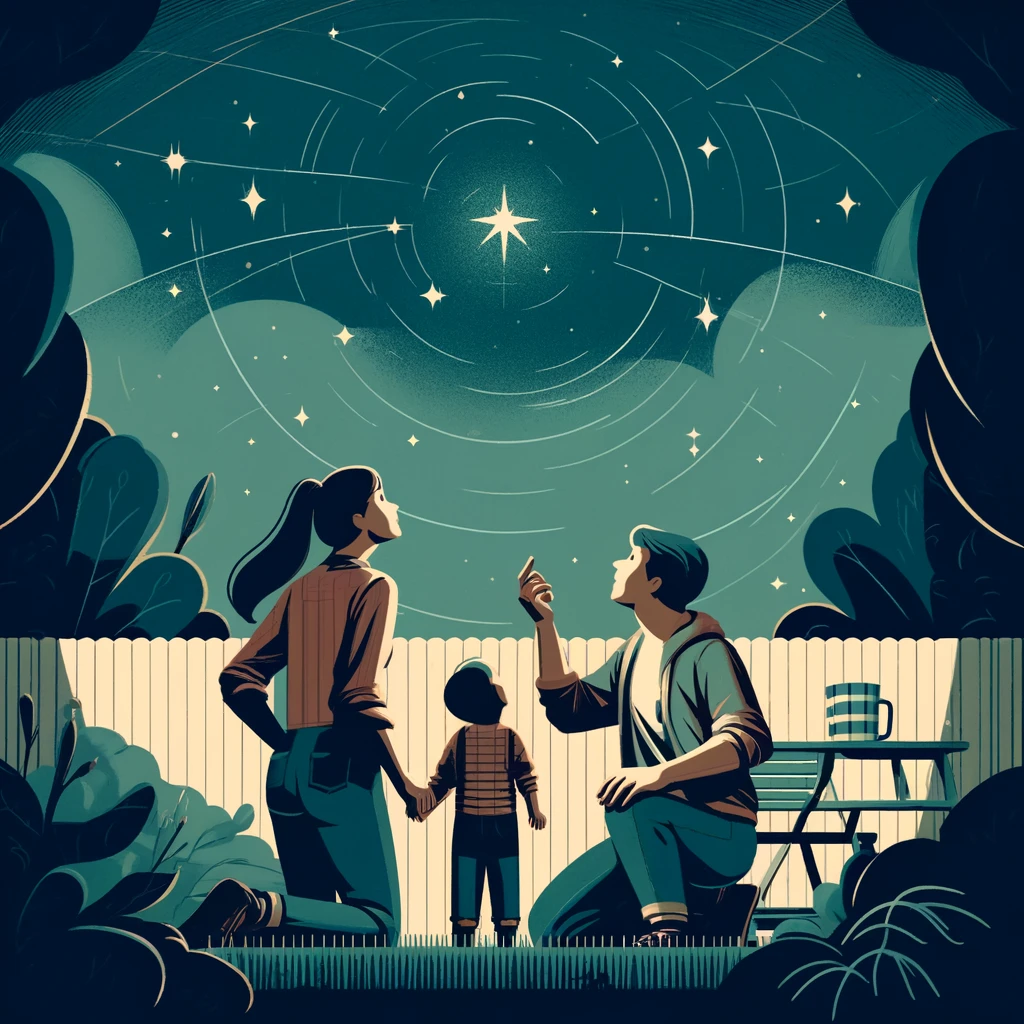
Out, lights off, the twenty-minute dark-adaptation clock started — and the hunt runs card by card — Plough first (someone finds it fast; it's designed that way), then the pointer-hop to the Pole Star performed for real (the moment the trick WORKS on the actual sky is the evening's payload — that star is north, forever, and now they own it), then Cassiopeia's W, then the seasonal showpiece. Each find gets confirmed against its card under red light and claimed aloud by its finder.
The observatory closes
Back inside to warmth and the debrief — cards annotated with found-it dates (a constellation card with a date is a certificate), the biscuit-dough or marshmallow models built if energy holds, and the standing assignment issued — find all three from anywhere, anytime, forever. Holiday skies, school-run dusks and camping trips all become test venues, and the family that owns three constellations tends quietly to acquire a fourth.
Make it fit your kids
They draw dots with abandon, adore the bear story, and come outside for ten minutes to shout at the moon — which is participation in full. Their card goes on the fridge regardless of astronomical accuracy.
The method's heartland — drawn cards, retold myths and the pointer-hop performed with ceremony. The found-it date matters enormously; the certificate instinct is real at this age.
They take the seasonal question seriously (why does Orion clock off in summer?), run the field session as guides, and are ready for the fourth and fifth constellations plus the ecliptic's planets as moving intruders in their fixed map.
The navigation framing lands best — north from the sky, latitude from the Pole Star's height, the skills sailors bet lives on. Pair with a night-mode phone photo of their constellation and the card acquires evidence.
Free at planetary scale — card, pencils, the library's myth shelf and a sky that charges no admission. The biscuit-dough models cost one baking session and are frankly optional structural engineering.
If it’s going really well
- One constellation per month — the family sky grows by twelve a year, cards dated like a passport.
- The holiday sky test — the same three found from a different latitude, plus the southern additions if travel goes far enough.
- The pinhole planetarium build — the indoor version for cloudy weeks, projecting the owned constellations onto the ceiling.