Shadow Drawing
A sunny-hour activity with a hidden physics lesson — toys and objects arranged on paper, their shadows traced and coloured, and the return visit that discovers the shadows have MOVED. Art at the start, astronomy by the end, chalk pavement giants for the finale.
Last updated
Before you start
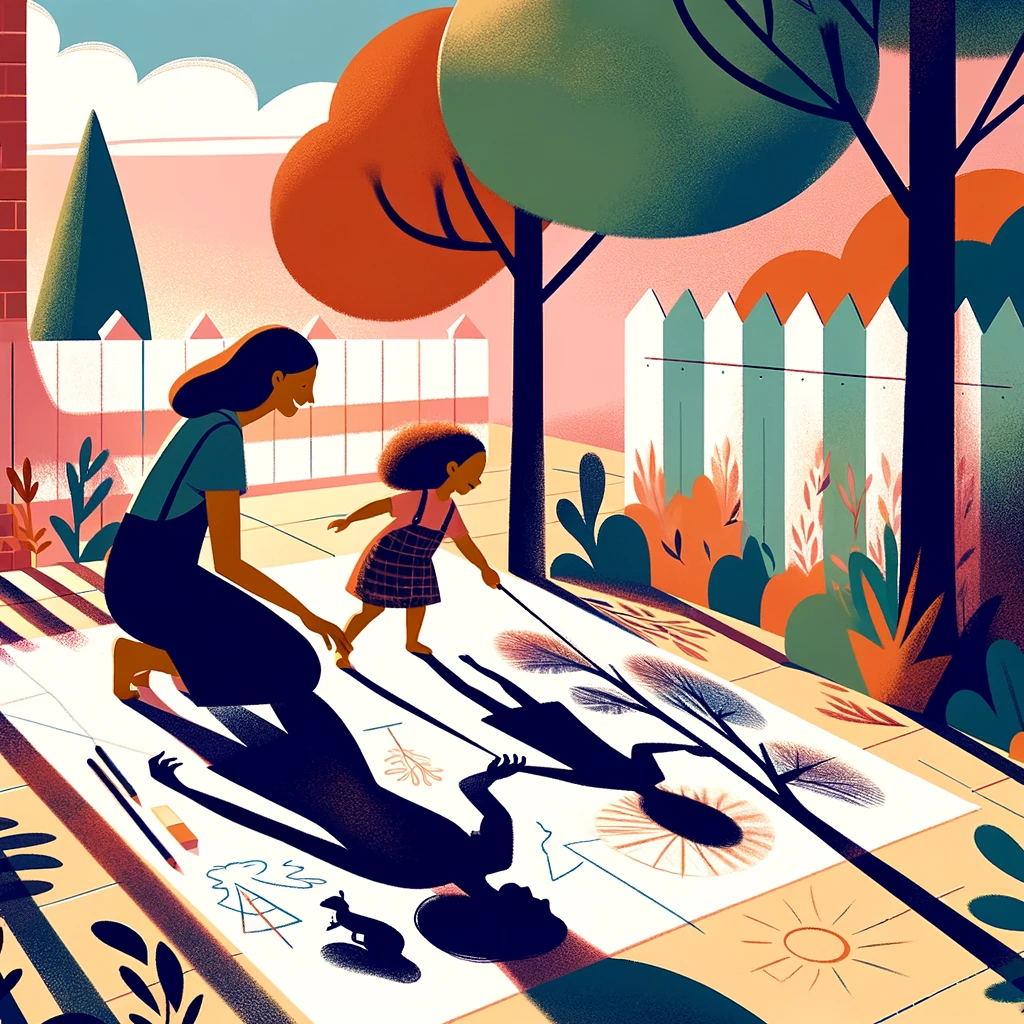
Shadow drawing needs one clear morning or afternoon and delivers two activities for the price of one. The first is art: dinosaurs, jugs and action figures stood at the paper's edge throw long crisp shadows that small hands trace into outlines begging to be coloured — tracing a shadow is drawing with the sun holding the stencil steady.
The second activity ambushes everyone an hour later: the shadows have moved. The dinosaur's outline no longer matches its shadow, and the why — traced again in a different colour, timestamped — is the rotation of the Earth arriving on a piece of A3. Do a third trace before pack-up and the paper becomes a sundial with a diplodocus on it.
How it goes
Casting call
Toys auditioned for silhouette quality in the sun — the profile test finds the stars (the stegosaurus wins, the ball disappoints, and discovering WHY is the first physics of the hour). Paper taped down with each toy stood at its edge, positioned so the shadow falls across the sheet, morning or later afternoon for the long dramatic shadows that make it work.
First trace
Shadows traced in the first colour, time written next to each — the timestamp feels bureaucratic and becomes the punchline later. Tracing technique for small hands — hold the pencil like a fence-post and follow the edge slowly; wobbles are style. Traced outlines get coloured, decorated and named while the sun does its slow work.
The discovery
Return to the paper — the shadows have abandoned their outlines. Let the discovery be theirs; the gap between outline and shadow is the hour made visible. Trace again in colour two, timestamp again, and take predictions for where the shadow will sit at the NEXT check — the prediction is the science, and someone always guesses the wrong direction, which is the good kind of wrong.
Pavement giants
The human-scale version in chalk — one person holds a pose on the path while another traces their shadow monster (long afternoon shadows make everyone three metres of legend). Giants get faces, costumes and names, the gallery gets toured, and the third toy-trace before pack-up completes the paper sundial. The chalk giants wash away with the next rain, which is somehow the right ending for an activity about things that move on.
Make it fit your kids
They stand toys, hold poses for their own giant, and colour the outlines with abandon — the moved-shadow discovery gets a genuinely puzzled frown that is worth the whole setup.
The discovery's target audience — the outline-versus-shadow gap lands as a real mystery, the predictions get argued, and the sundial concept clicks by trace three. Chalk giants reach their artistic peak here.
Ready for the full sundial build — a stick, a paper plate, hourly marks through a Saturday — and the why answered properly (it's us that moves). Shadow-length maths (why morning giants beat noon dwarfs) extends it for the keen.
The photography angle is the door — long-shadow portraits at golden hour, stop-motion of the moving shadow, a time-lapse of the sundial. Same physics, their medium.
Free in full sun — paper, pencils, chalk and toys already on staff; the sun does the expensive work without invoicing.
If it’s going really well
- The full sundial — stick, plate, hourly marks, and one Saturday of checking; the ancient technology rebuilt in a morning.
- Shadow puppet crossover — the traced toys become card silhouettes for the evening's torch-lit show; one cast, two theatres.
- Season tracking — the same toy traced at the same hour once a month; winter's long shadow versus summer's short one, on one accumulating sheet.