Story Time Theatre
An hour that turns a favourite picture book into a living-room production — the reader narrates, everyone else plays the parts, props come from the toy box, and the story the kids know by heart becomes theatre precisely because they know it by heart.
Last updated
Before you start
The best script in the house is the picture book they've demanded two hundred times — known by heart, loved beyond reason, and therefore performable without rehearsal. Story theatre works because the knowing is already done: the narrator reads, the cast acts each beat as it arrives, and the familiar story becomes startlingly funny the moment Dad is the troll under the coffee-table bridge.
The casting rule that makes it sing: adults take the monsters and the smallest kid takes the hero. A three-year-old defeating a full-sized parental wolf is the fundamental theatre of childhood, and no bought entertainment beats it. Keep productions short — one book, played twice, because the second run (roles swapped) is always louder and better.
How it goes
Casting call
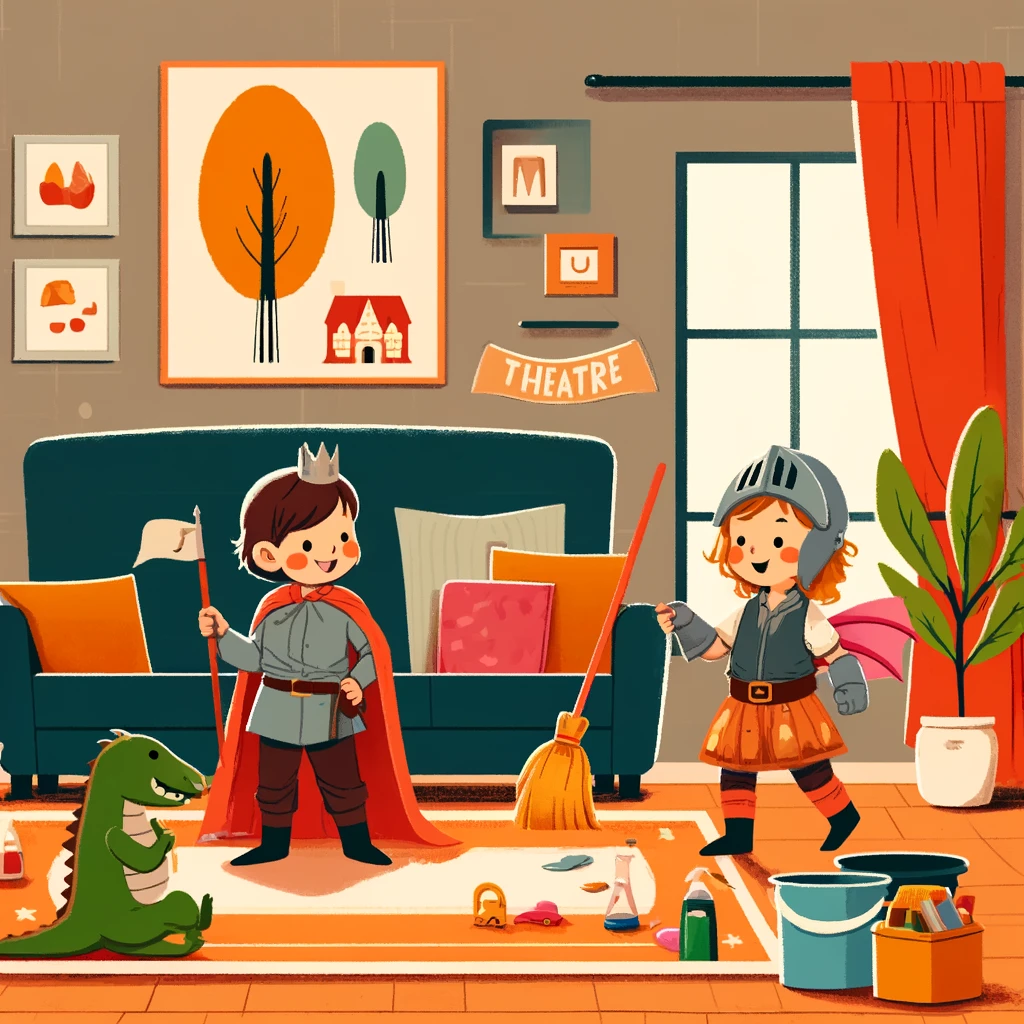
Choose the book (they'll choose; resistance is decorative) and cast it — hero to the youngest, monster to the biggest, narrator to the strongest reader. Every part matters, including Tree and Door, which go to whoever needs a part with no lines and full dignity. Costumes are one item each — a hat makes a character; a full costume makes a delay.
Set construction
Map the story onto the room — the sofa is the mountain, the rug is the river, the doorway is wherever entrances happen. Sound effects get assigned to the audience-in-waiting or the cast themselves — knocking, wind, the troll's stomach. Kids take sound-effect duties with orchestral seriousness.
The performance
Narrator reads; cast performs each beat as it lands. The pace is the book's pace, which is why it works — no lines to forget, just moments to inhabit. Play the monster fully — the chase bit at three-quarter speed, the defeat with operatic drama. The hero's victory gets held as long as the hero wants it held.
The second show
Roles rotate — the hero becomes the monster, the monster becomes the tree, and the second run is faster, louder and funnier because everyone now knows the staging. Bows all round, and the book goes back on the shelf changed — bedtime readings of it are performances forever after, with everyone doing their bits from the sofa.
Make it fit your kids
The hero, always — walked through each beat by the narrator, triumphant on schedule. Their improvised line ("no, MY bridge") enters the family script permanently.
Full company members — they'll block scenes, demand a costume upgrade and run the sound effects desk. By show two they're directing; by next week they're adapting a second book unprompted.
Narrator-directors — voice work, dramatic pauses, and staging opinions. Or hand them the villain role opposite a small hero, where their theatrical excess finally has a licensed outlet.
They'll decline the cast list and accept the cinematographer role — filmed story theatre with dramatic angles becomes a family archive gem within two productions.
Free in perpetuity — the book is owned, the sofa is a mountain, and a tea-towel has been every headdress in theatrical history.
If it’s going really well
- The double bill — two books, interval snacks, tickets drawn by the cast.
- Adaptation studio — the book rewritten with the family as characters, performed as a world premiere.
- Graduate to the sock-puppet or shadow-puppet stage for the same story in a new medium — the repertory company expands.