Create a Bug Hotel
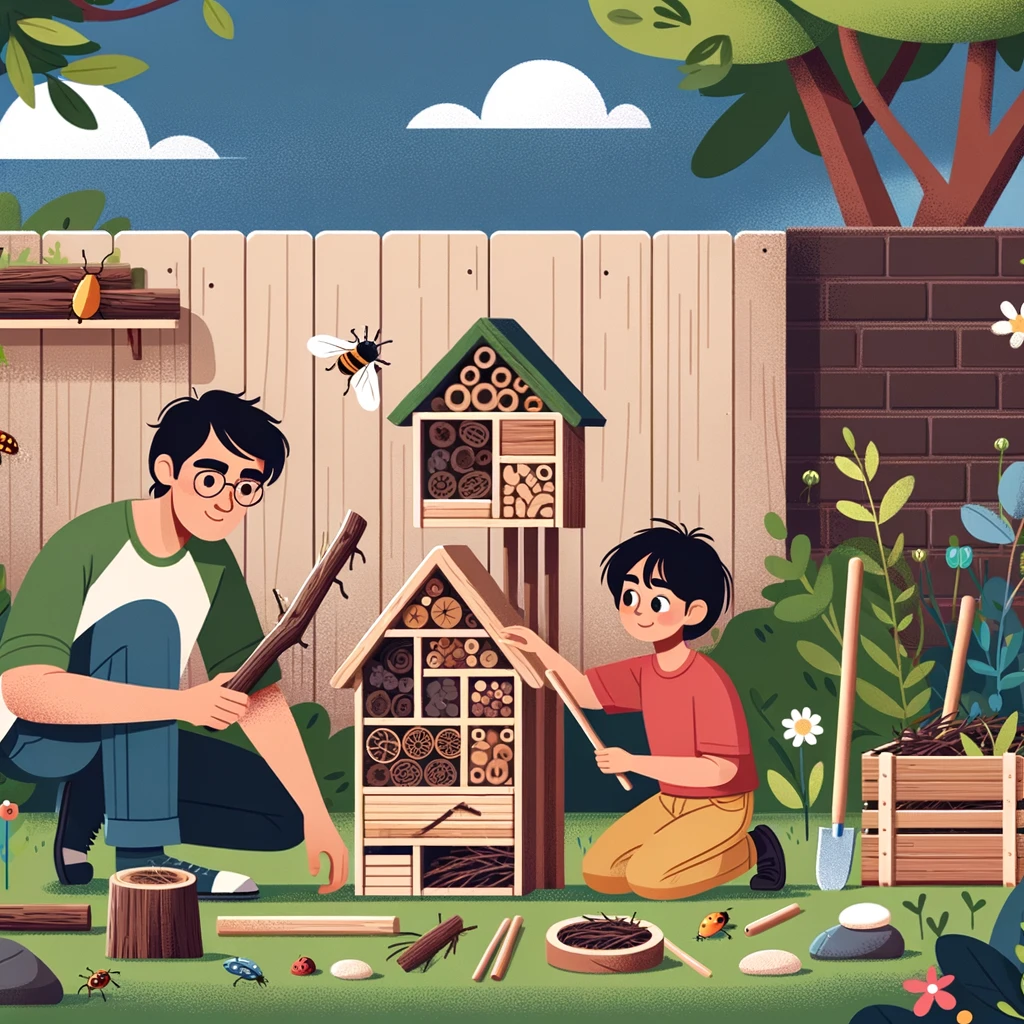
Half a day of habitat construction — a stacked structure of found materials where every layer targets a different guest — bamboo tubes for solitary bees, dead wood for beetles, dry leaves for ladybirds and the damp brick basement for the woodlouse economy. Checked seasonally, occupied genuinely.
Last updated
Before you start
A bug hotel is deliberate clutter — the pile of hollow stems, dead wood and dry leaves that a tidy garden lacks and its wildlife misses. Built as a stack (pallets or bricks-and-planks, layered like floors), it houses different guests per storey, and knowing WHO each layer targets is the build's whole education: bamboo tubes at bee-height for solitary bees (harmless, fascinating, and the tube-capping in spring means eggs), drilled logs for beetles, straw and cones for ladybirds and lacewings, the damp ground floor for woodlice, and moss pockets for whoever's asking.
The siting decision does half the ecology — south-facing for the bee floors, back edge shaded and damp for the basement dwellers, and NEAR the action (flower bed, hedge, veg patch) because a hotel needs a neighbourhood. Occupancy takes weeks and seasons, not days; this is the long-game build, and the spring bee-tube check is its dividend day.
How it goes
The materials drive
The gathering is half the project — cones and leaves from the walk, bamboo from the dead canes pile, logs from anyone pruning, the pallet from the usual pallet places. Sorting the haul into layer-piles teaches the guest-list logic before a single brick stacks — hollow things, rotting things, dry things, damp things — each pile is a different tenant's furniture.
The frame raise
Site chosen (sun for the top floors, shade at the base, neighbourhood nearby) and the frame stacked STABLE — bricks squared, pallets flat, the wobble-test passed with an adult's full lean before any child works beneath it. Ground floor first — bricks on soil (not slabs — the basement tenants commute from underground), pot shards and damp wood in the gaps.
Fit-out
Each floor packed by its specialists — bamboo bundles tied and wedged tube-ends-out on the sunny side, drilled logs alongside, then the soft floors of straw, cones and leaves packed firm (loose stuffing blows away by Friday). Everything wedged tight enough to survive weather but loose enough to hold air — the packing judgement IS the craft. The roof goes on last — plank, bark or old tiles, overhanging like a proper eave.
Grand opening and the long watch
The hotel gets a name (painted sign, obviously — "The Bug Ritz" has been taken by this garden), a formal opening, and its first guided tour with each floor's target guests introduced. Then the expectation-setting that protects the project — tenants arrive on their own schedule — woodlice this week, ladybirds by autumn, and the bee tubes' capped ends NEXT spring, which is the moment the whole build pays out. The seasonal inspection (look, don't dismantle) goes in the calendar quarterly.
Make it fit your kids
Chief gatherers and soft-furnishing installers — cones, leaves and moss are their department, pressed into gaps with total focus. The tour is theirs to repeat for every visitor, floor by floor.
The build's heart — layer logic, bundle-tying, packing judgement and the naming ceremony. The spring tube-check belongs to this band; the capped-tube discovery is a core memory in waiting.
Site engineers — they'll run the stability maths, drill the beetle logs under supervision, and turn the inspections into a proper occupancy log by species and season. The hotel becomes their long-term research station.
One good design brief — an architectural hotel worth photographing, or the solitary-bee tube science done properly (tube diameters compared, occupancy recorded) — and the build earns its place on their feed and their UCAS-adjacent project list.
Built entirely from scrounge — pallets are free where pallets are, the garden supplies the furnishings, and the only conceivable spend is string. The deluxe versions in garden centres cost forty pounds and house fewer tenants.
If it’s going really well
- The hedgehog wing — a ground-level annex with a leaf-stuffed chamber and a five-inch doorway; the hotel chain expands to mammals.
- The occupancy log — quarterly inspections recorded by floor; two years of data is a genuine ecological document.
- The pollinator garden — a flower strip planted within bee-commute of the hotel; accommodation plus catering is how you get five stars.