Bug Safari
An hour of minibeast fieldwork in the garden or park — the five reliable habitats checked in order, finds observed in a magnifying pot and released where they were found, and a safari tally that turns woodlice into wildlife. The code of conduct is half the lesson.
Last updated
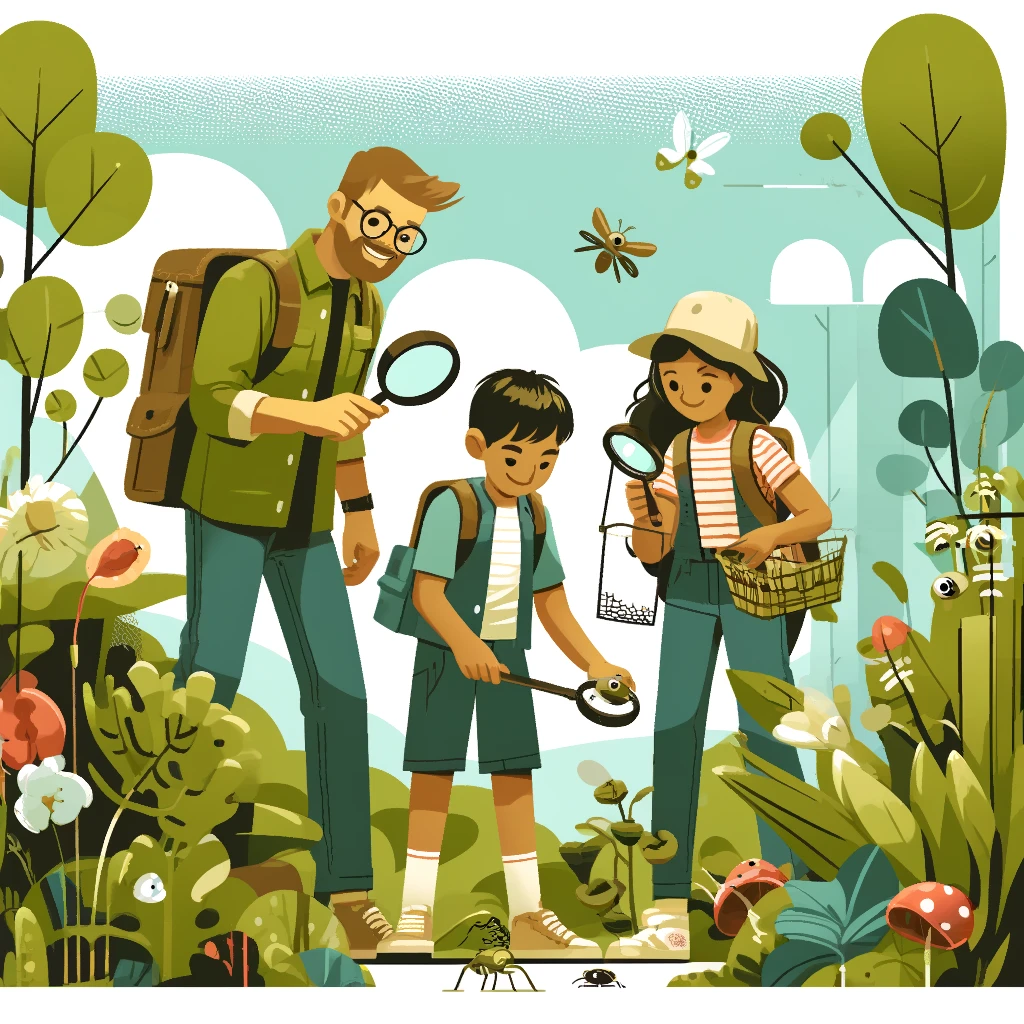
Before you start
Every garden runs a game reserve nobody visits — under the logs, beneath the plant pots, in the long grass and the compost's edges. A bug safari visits properly: slow, methodical, habitat by habitat, with the two-handed log-lift and the magnifying pot that turns a woodlouse into a rhinoceros.
The safari code does the real teaching: everything goes back where it came from, the log goes down the way it was, and hands stay gentle or the safari ends. Framed as ranger law rather than nagging, kids enforce it on each other — and the habit of handling the small world carefully is worth more than any species count.
How it goes
Ranger briefing
The code taught first — gentle hands, brush not fingers for the small stuff, everything released home, logs lowered like sleeping dragons. Then the route map — the five reliable habitats in order (under logs and stones, plant-pot bottoms, long grass, the compost edge, the shed's damp side) with predictions of what lives where. Predictions matter; being right feels like expertise and being wrong feels like a plot twist.
The drive
Habitat by habitat, slow — the two-handed lift, the look BEFORE the grab, the brush-assisted boarding of the pot. Each passenger gets the full treatment — magnified viewing, a name, the tally mark — before release at its own front door. The star finds run to form — woodlice armies, the centipede (fast; pot-only, no hands), a beetle with presence, and with luck the worm cast in progress or the ant highway that stops the whole safari.
The hide
One patch of grass or the ant line, watched in silence for five whole minutes, lying down — the safari's stillness training. What moves when humans stop moving is the answer; there's always more than anyone predicted, and the youngest ranger usually spots it first.
The lodge debrief
Tally totals, star sightings, the day's best name (a woodlouse called Brian has a long history here), and the mystery finds looked up in a book or a search — one unidentified beetle is worth the whole safari. The sheet goes on the fridge; the next safari books itself for a different season, because the reserve changes its cast quarterly.
Make it fit your kids
Woodlouse-tier passengers only — big, slow, armoured and unbothered. Their stillness in the hide lasts ninety seconds and their pointing arm is the safari's best sensor.
Full rangers — code-enforcers, tally-keepers and namers of beetles. The prediction game and the mystery-find lookup land hardest here; a field guide of their own is the birthday hint.
The science tier — a proper pitfall trap (cup sunk overnight, checked at breakfast, everything released), habitat comparison counts, and the discovery that the garden has more species than anyone's list.
Macro photography is the door — the same finds through a phone's close-up lens produce genuinely impressive shots, and the patience the shot demands arrives dressed as craft.
A jam jar with a paintbrush is the full kit — the magnifying pot is a pound-shop upgrade, and the tally sheet is hand-drawn at the kitchen table as the pre-safari activity.
If it’s going really well
- Build the bug hotel — the safari's finds get purpose-built accommodation, and the reserve gains a flagship development.
- The seasonal census — same route, four seasons, one clipboard; the cast change is the ecology lesson.
- Night safari — the same habitats by torchlight, when the slugs commute and the woodlice throw their parties.