Backyard Bird Watching
An hour that starts a habit — setting up a watch station at the best window, learning five birds properly (not forty vaguely), and running a tally that turns sparrows into scores. Add food and the garden's cast grows weekly.
Last updated
Before you start
Birdwatching fails for kids when it's presented as quiet appreciation and works instantly when it's presented as a count — tally chart on the windowsill, five target species, points on the board. The hunting instinct does the rest; a seven-year-old who'd never "watch birds" will keep a blackbird ledger with the rigour of an accountant.
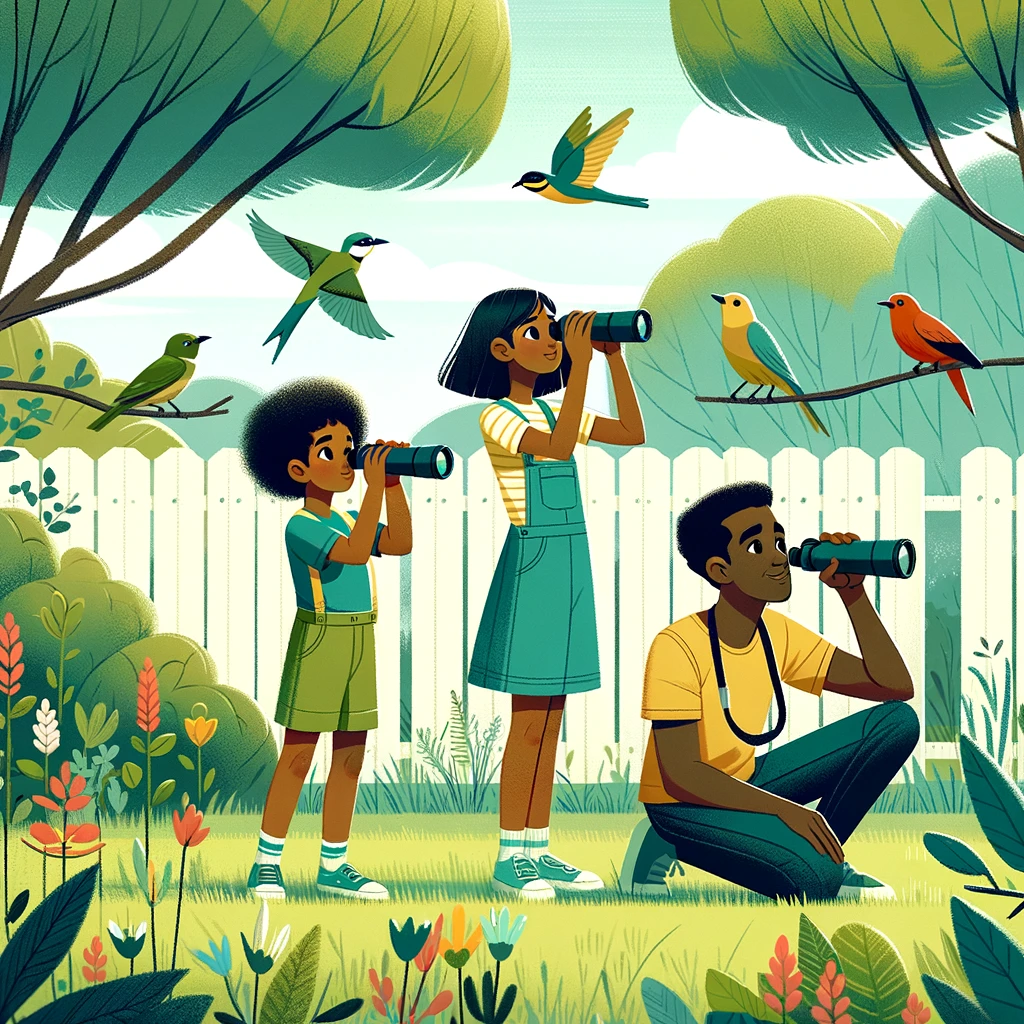
Start with five birds learned properly — for most gardens that's blackbird, robin, blue tit, magpie and woodpigeon — from a printed sheet at the window. Five known birds beats a book of forty unknowns; every knowable bird after that is an addition, and additions are events. Food is the cheat code — even a scattering of oats and sultanas repositions your garden as a café within days, and the café's regulars become characters with names.
How it goes
Build the hide
Choose the window, arrange the seating (kneeling on a chair backwards is the traditional posture), and put up the five-bird sheet and the tally chart. Rules of the hide — slow movements, murmured voices, pointing with eyes not arms. The stealth protocol is half the fun and all of the success.
Bait the café
Food out — scattered on the lawn or a wall where the window can see it, plus a shallow dish of water, which pulls birds in dry weather better than any seed. Then the hardest instruction in the activity — come away from the window for ten minutes and let the café open.
The watch
Tally every visitor against the sheet — the count is the game, and disputed identifications get settled against the pictures (the dispute IS the learning). Name the regulars — the fat woodpigeon, the robin with attitude — because named birds get watched harder. One bonus column for "mystery bird — describe it" starts the life-list habit without anyone calling it that.
The report
Totals tallied, champion species declared, mystery birds investigated against a book or a search. The chart stays on the sill and the count reruns tomorrow — same time if possible, because the café's rush hours become knowable, and knowing when the blackbird comes is the actual arrival of birdwatching.
Make it fit your kids
They watch in bursts and tally with dots the size of plums — their job is spotting movement, at which they are genuinely better than adults, and shouting BIRD with insufficient stealth.
The ledger years — rigorous tallies, named regulars, fierce identification disputes and the mystery-bird column as a badge of honour. The habit installs here if it installs.
Ready for the real thing — a proper field guide, the garden list as a document, seasonal patterns noticed and predicted. The national garden birdwatch each January gives their data an actual scientific home.
The camera is the way in — bird photography from the window turns the café into a portfolio, and the patience it demands arrives disguised as craft.
Free at every tier — the sheet is hand-drawn, the food is porridge oats, and the binoculars are toilet rolls taped together, which small children prefer anyway.
If it’s going really well
- Build the feeder — the pine-cone or bottle feeder upgrade turns the café permanent.
- The dawn sitting — one weekend early start with hot chocolate, because the dawn shift is when the café queues.
- Away fixtures — the same tally format at the park or a nature reserve; the hide travels.