Outdoor Art Gallery
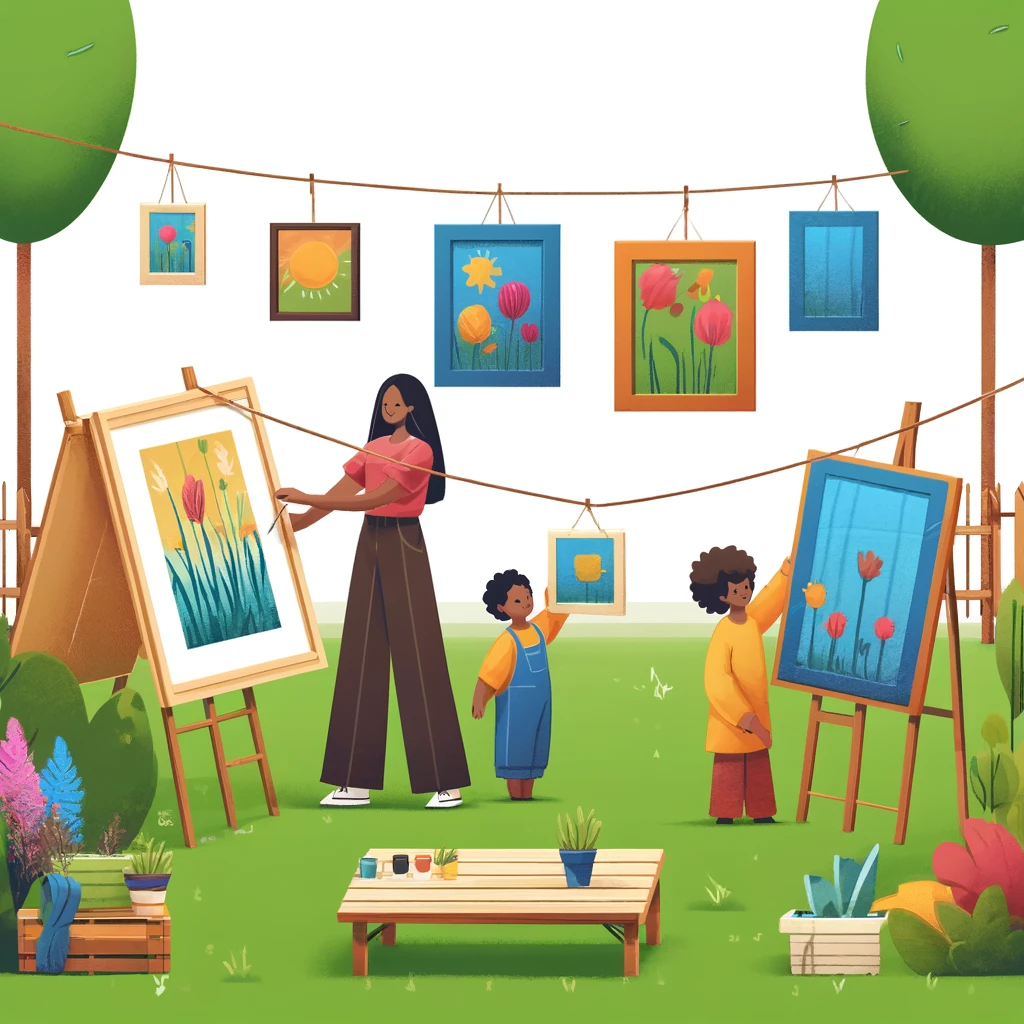
Half a day where the garden is both studio and gallery. Big weatherproof-ish art gets made outside — banner painting, rock sculpture, land art from whatever the garden sheds — then curated along the fence and washing line for an opening event with invited critics (neighbours, grandparents, the postman if timed well).
Last updated
Before you start
Painting outside changes what kids make — bigger, looser, braver, because the grass doesn't care about spills and the fence doesn't mind drips. The gallery framing gives the morning a deadline and a purpose: everything made today hangs today, and there's an audience coming at four.
The curation is secretly the richest bit: hanging the show is a second activity hiding inside the first. Which piece goes at eye height, what hangs next to what, what the sculpture corner needs — kids argue about sequencing like tiny gallerists, and titling every piece (with prices, they'll insist on prices) turns the fence into an institution.
How it goes
Studio setup
Ground sheets down, paints decanted where grass can absorb the tragedy, canvases distributed — one big shared banner plus individual pieces. Announce the deadline and the opening time; artists work differently with a show coming, which is to say, they finish things.
The making
Three studios run at once — painting (big, loose, sponge skies encouraged), land art (spirals of stones, leaf mandalas, stick towers — impermanence is the medium and photographing it is the preservation), and sculpture (mud, stacked stones, whatever the shed donates). Adults make too, badly and visibly; a working studio has no spectators.
The hang
Washing line and fence become the gallery — pegged paintings, string-hung card pieces, the sculpture corner groomed. Every work gets a title card in its artist's own hand and a price in whatever currency the artists decree (leaves, million pounds, hugs — market forces at play). The gallery sign goes at the gate with the opening hour.
The private view
Critics arrive — the other parent home from wherever, neighbours over the fence, a grandparent summoned, the group chat as remote attendance. Artists give tours of their own work; hard-hitting questions ("why is the dog green?") get artist statements in reply ("he felt green"). Squash in proper glasses, photographs of artists beside pieces, and red dots (stickers) on everything "sold". The show stays up until weather makes the call.
Make it fit your kids
Resident fingerpainters and land-art naturals — a leaf pile arranged by a three-year-old holds the sculpture corner. Their tour of their own work is the private view's headline act.
The show's engine — prolific output, fierce title opinions and full engagement with the red-dot economy. They'll run the tours and set the prices.
Gallerists — give one the curation brief and another the private-view catering or invitations. Their own work goes ambitious (the four-sheet banner) with a deadline squeeze they'll beat by minutes.
Exhibition photographer and catalogue designer — shot list, artist portraits, a typed price list that elevates the whole fence. Their own entry arrives late, unannounced, and is quietly the best thing in the show.
Lining paper and three poster paints run a few pounds; the zero-spend show works in chalk on the patio and pure land art, with the same private view and the same satsuma economy.
If it’s going really well
- The seasonal programme — a summer show, an autumn land-art special (the leaves do the work), a chalk winter piece.
- Postcards of the best works printed at a kiosk — the gallery gets a gift shop.
- Guest artists — another family brings works and the show goes group; rivalries between five-year-old painters are excellent value.