Family Art Project
Half a day making one big collaborative artwork instead of four small separate ones. A shared theme and a divided canvas keep the peace; the joining-up stage is where it becomes a family piece. Ends with a hanging ceremony and a plaque, because galleries have plaques.
Last updated
Before you start
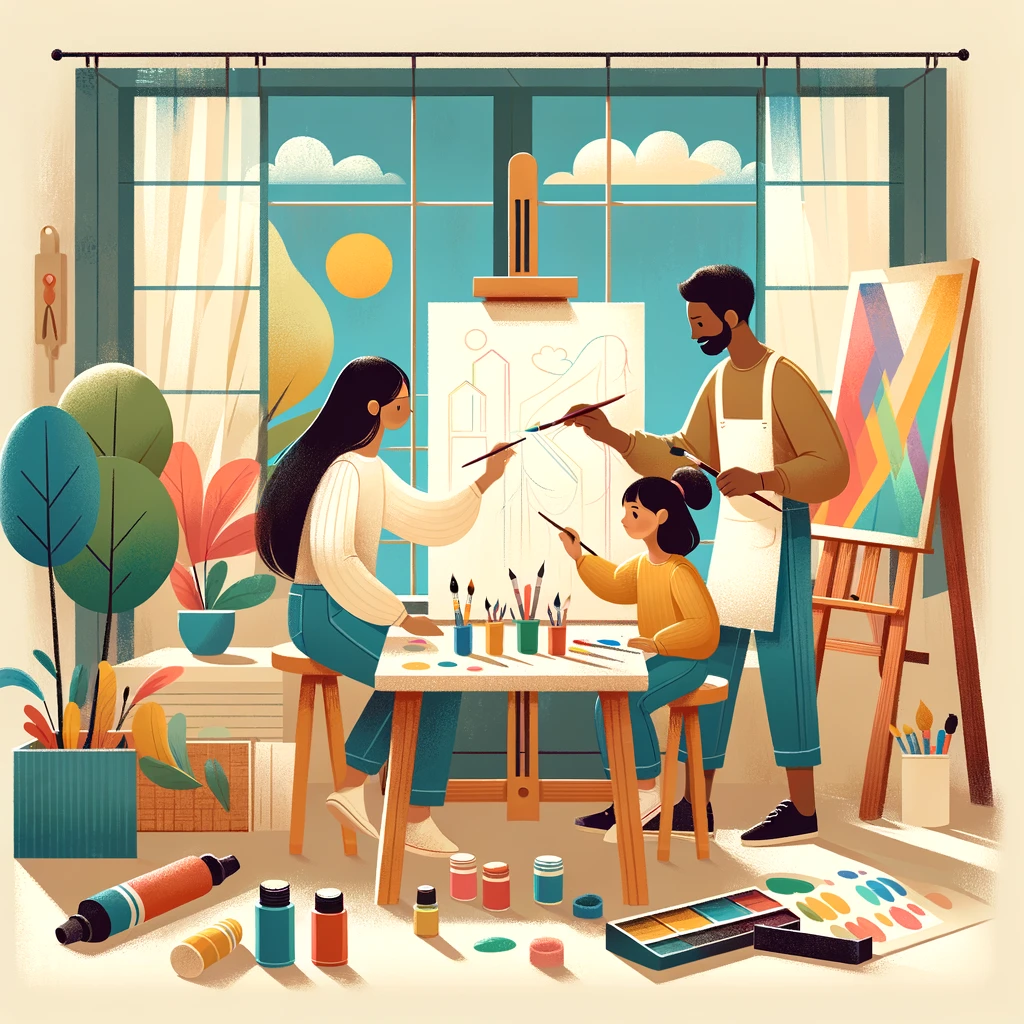
The difference between this and normal painting is the word one — one big surface, one theme, everyone working on the same piece. Lining paper from a DIY shop (a few pounds a roll, metres of canvas) taped to the table or floor is the classic setup, and a theme with room in it — our street, under the sea, the family as animals — beats a free-for-all.
The peace-keeping move: divide the canvas into personal territories, but agree the connective tissue up front — the road that runs through every zone, the sea that touches every island. Without connections you get four paintings taped together and a border dispute by eleven; with them, the moment the zones join up is the moment it becomes one artwork, and everyone feels it happen.
How it goes
The commission
Agree the theme like a proper commission — pitches, a vote, no adult veto unless it's unpaintable. Sketch the master plan on scrap paper — who has which zone, and crucially what runs between them. Sign the plan. Artists respect a signed plan for up to forty minutes, which is enough.
Underpainting
Big shapes first, details later — skies, seas and fields before windows and whiskers, because every child instinctively does the opposite and then paints a sky through their finished house. Sponges make anyone's sky look professional. The adults paint too — badly is fine, absent is not; a watching parent turns art into performance.
The joining
The connective features get painted across the zone borders — the road, the river, the washing line of tiny clothes. This is the moment it stops being four paintings. Details, signatures-in-the-corner and one collective decision about the sky's weather finish the painting layer.
Hanging day
While it dries, make the plaque — title, artists, year, in best handwriting. Then the hanging ceremony in a location with real footfall (hallway beats bedroom; guests must be forced to encounter it). Unveiling, short speeches from each artist about their zone, photographs with the work.
Make it fit your kids
A sovereign fingerpainting zone with hard tape borders, downhill of everyone else's work. Their zone will be the most confident painting on the canvas and secretly everyone knows it.
The core workforce — houses, creatures, suns with faces, and strong feelings about the master plan. They police the signed plan and drive the joining stage.
Art directors — they'll want perspective, colour mixing and the horizon line explained properly. Give one the plaque commission and another the unveiling speech.
Assign the hardest zone (faces, the family portrait section) or the whole composition role. If painting's beneath them, they document the process and produce the making-of reel, which will outlive the painting.
A roll of lining paper and three pots of poster paint come in under a fiver and make four of these. The zero-spend version paints the inside of flattened cardboard boxes with whatever half-dried pots the craft drawer offers.
If it’s going really well
- The series — same canvas size, new theme each school holiday; the hallway becomes a retrospective in about a year.
- Postcard prints — photograph the finished work, print postcards at a supermarket kiosk, and let the artists send their own work to relatives.
- Outdoor edition — old-sheet banner painted in the garden, hung on the fence for maximum neighbourhood exposure.