Nature Collage
An hour in two halves — the forage (a walk with a bag and sharp eyes) and the making (leaves, petals, seeds and bark composed into pictures and glued down). Zero drawing skill required; the materials arrive pre-beautiful.
Last updated
Before you start
Nature collage is the most forgiving craft there is — nobody has to draw anything, because a leaf is already better than anything anyone can draw. The gathering walk is genuinely half the activity: eyes switch on within minutes ("LOOK at this one"), and the difference between a walk and a forage is a paper bag.
The one technique that lifts the results: arrange everything first, glue last. Kids who glue as they go entomb their first idea; kids who compose loose on the paper — moving the hedgehog's spikes around, auditioning three leaves for the boat's sail — discover editing. Announce the no-glue-for-ten-minutes rule at the start and enforce it warmly.
How it goes
The forage
Walk anywhere with green edges — park, lane, the garden itself — collecting fallen and abundant only (the ground gives everything a collage needs; nothing gets picked from a living plant without asking its owner). Brief the eyes with a loose list — colours, shapes, one feather if fortune allows — and let the bags fill. The strange find (the perfectly round leaf, the seed like a helicopter) gets celebrated on the spot.
The sorting table
Bags tipped and treasure sorted — by colour, by shape, by "special" — which is half sensory play and half palette-building. Damp material gets a kitchen-towel blot. The sorted table looks like a paint shop run by a forest, and the making urge arrives on its own.
Composition
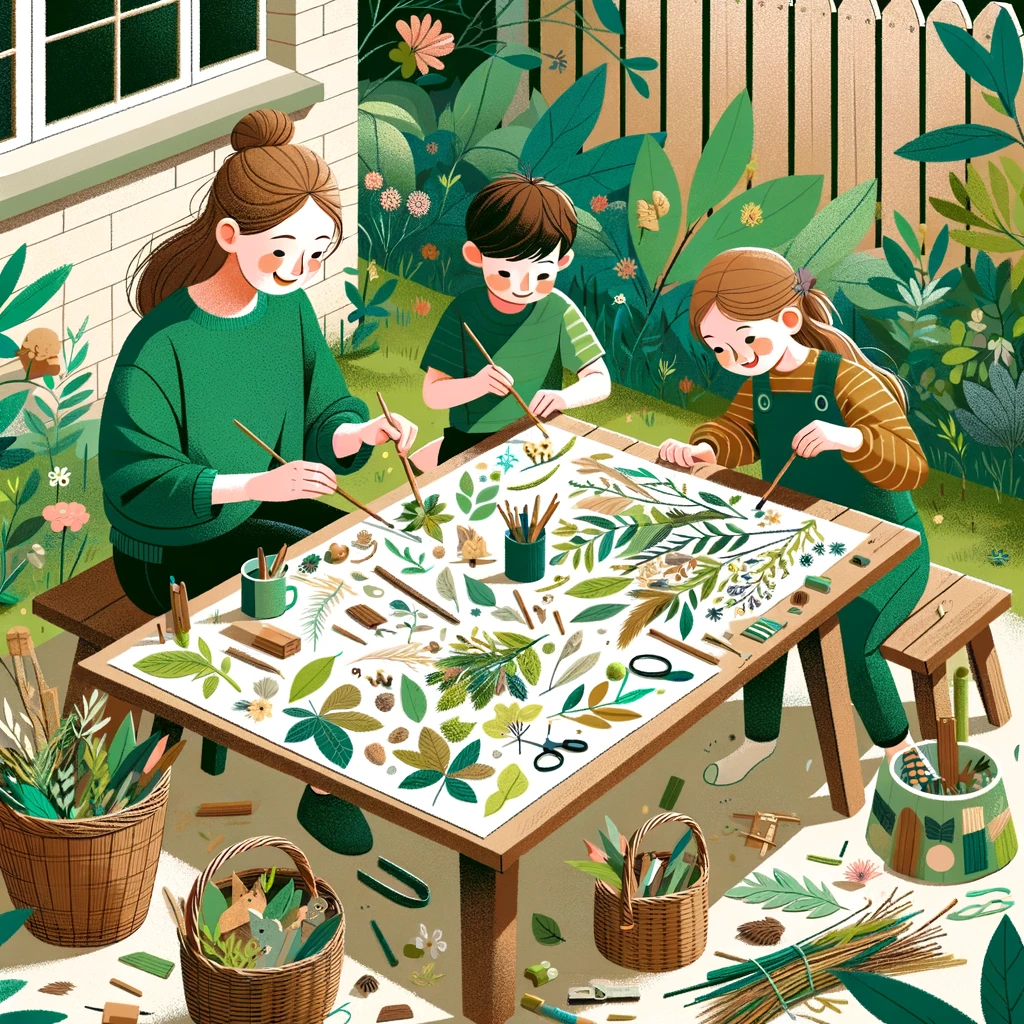
Pictures built loose on the card — faces with petal eyes, hedgehogs wearing leaf spikes, landscapes where bark is mountains, or pure pattern (mandalas of alternating colours — deeply satisfying and ageless). Ten minutes minimum before glue touches anything; pieces get moved, swapped, and upgraded, which is the craft's whole lesson.
Fixing and framing
Glue the final arrangements — dots not puddles; leaves ride on less than kids believe — and title each work (titles are free and improve everything). The finished pieces dry flat under nothing, then hang in the gallery spots; the best single leaves go into the press or a heavy book for winter's collage stock, a small act of seasonal banking.
Make it fit your kids
Foragers of boundless volume and zero discrimination — their bag is 90% the same leaf and 10% treasure. Their collage is glue-forward abstract expressionism and goes up unedited.
The composition years — hedgehogs, faces and scenes with narrative captions. The no-glue window fits them exactly; watch the third redesign beat the first.
Pattern and craft arrive — mandalas measured by eye, colour gradients from green through flame, and pressed-leaf work planned across seasons. Introduce the flower press as their instrument.
Reframe as pressed-flower art or natural dyeing's front porch — composition on canvas, proper framing, results that sell at fairs. The forage walk stands alone as their acceptable version.
Free — the materials fall from trees on schedule, the card is a cereal box inside-out, and one glue stick covers a family's autumn output.
If it’s going really well
- The seasonal series — one collage per season, same forager, hung as a quartet by year's end.
- Leaf-rubbing hybrid — rubbings as backgrounds, collage on top; two crafts, one walk.
- Nature-collage postcards — small works on card stock, posted to grandparents while still faintly smelling of outside.