Family Tabletop Adventure
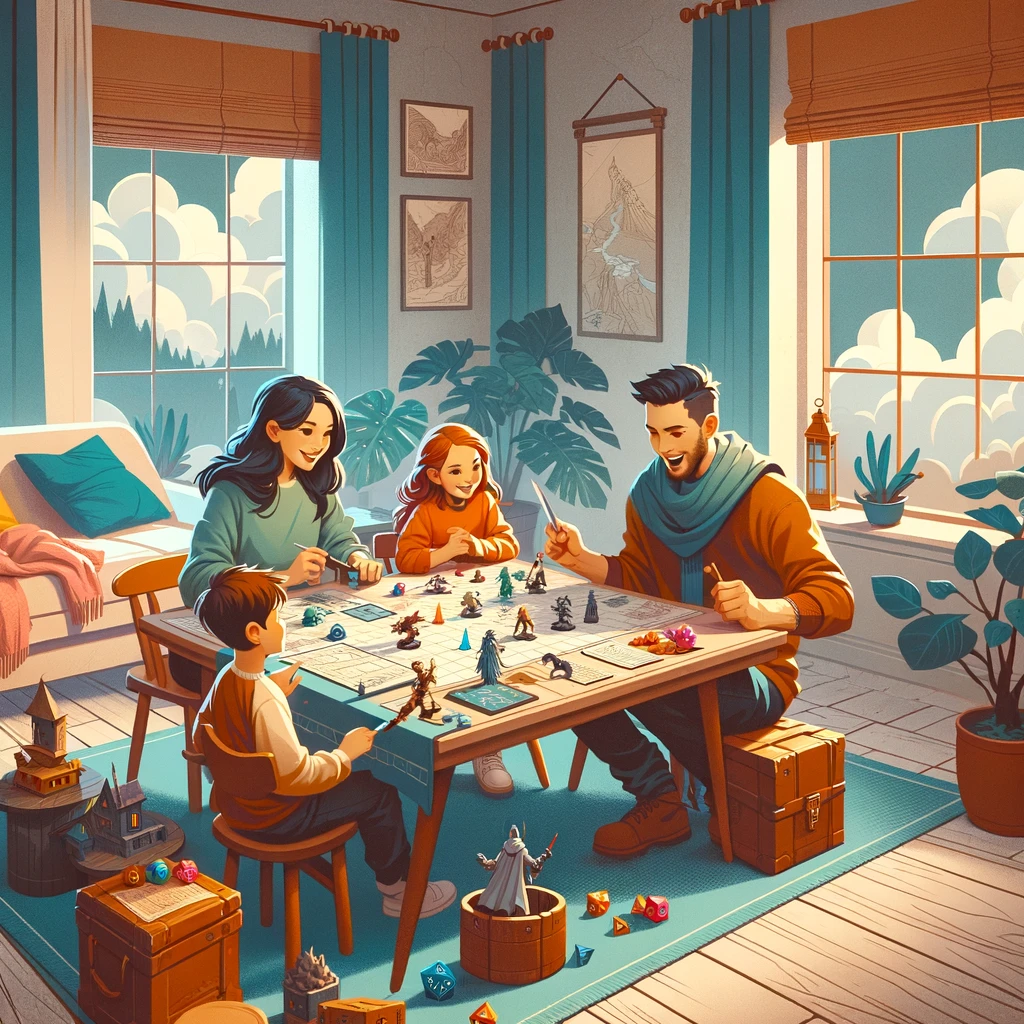
Half a day of collaborative make-believe with just enough rules — character sheets with three stats, one six-sided dice, and a parent narrator running a simple quest. It's structured imagination — the kids make every decision, the dice makes it exciting, and the story belongs to the table.
Last updated
Before you start
This is the family version of the games with the thick rulebooks, and the honest secret of those games is that the rulebook was never the point — you need characters, a narrator, a quest and one dice. The narrator (you, first time) describes the world and asks the eternal question — what do you do? — and the players' answers, plus a dice roll when things get risky, generate the whole afternoon.
The complete rules engine: when something might fail, roll the dice — four or higher succeeds, and a six succeeds brilliantly. That's it. Charging the goblin, charming the dragon, jumping the ravine — announce, roll, narrate the result generously. Failures move the story sideways, never dead-end it ("the rope snaps — you land in the underground river, which is moving somewhere...").
How it goes
Character creation
Everyone builds a hero — name, kind (knight, wizard, ranger, talking badger; all legal), a drawn portrait, and three stats (Strong, Clever, Sneaky — share seven points among them). One special thing each — a sword, a spell, a suspiciously intelligent pet. The sheet IS the toy; laminate-grade care will be taken with it. Adults playing alongside as heroes (with a co-narrator) works too, but the kids-as-party shape is the classic.
The quest hook
The narrator opens with a scene and a problem — the village's bread has been stolen by something with big footprints; the lighthouse light has gone out; Gran's cat is missing and was last seen speaking. Small stakes, big atmosphere. End the opening with the sacred words — what do you do? — and surrender the wheel. From here the players drive; the narrator just keeps describing where they've driven to.
The adventure
Run the five sketched scenes loose — a journey hazard, a puzzle, a stranger who knows something, a lair approach, the confrontation (which the best tables solve by talking, trading or befriending rather than fighting — reward that lavishly). Stats guide rolls — Sneaky past the sleeping bear, Clever at the riddle door. Give every hero a spotlight scene where their build is exactly what's needed. Break for tavern rations at the halfway cliffhanger.
The ballad
Victory (they always win, eventually, sideways) gets narrated in full colour, loot gets distributed (drawn on the sheets), and the party recounts the tale over snacks — the retelling, immediately, is how it enters family legend. The sheets go somewhere safe because the campaign has begun — next session's hook gets whispered as a teaser at bedtime.
Make it fit your kids
Too young for stats, exactly right for cameos — they play the talking cat or the innkeeper's loud child, appearing when they orbit past the table. Their dice rolls are ceremonial and always succeed.
They play with total belief and negotiate with monsters in ways that will restructure your quest live. Keep scenes short, physical props occasional (the actual key to the actual door), and the dice in their hands.
The heartland — they'll want the map, the lore, and eventually the narrator's chair. Give it to them for one scene, then one session; a twelve-year-old running a quest for the family is the activity's final form.
They may already know the real rulebooks — let them run the table properly, or play the party's chaotic wildcard. Either way the family session becomes the gateway to a hobby that lasts decades.
One dice, some paper, done — the free-est afternoon on the site. The thick rulebooks can come later if the hobby takes; they're upgrades, not requirements.
If it’s going really well
- The campaign — same heroes, new quest each holiday, a map that accumulates pins and grudges.
- The world-building afternoon — the family invents the kingdom properly — map, factions, the inn's menu.
- Graduate to a beginner box of a real system when the table demands crunch; the homemade engine will have taught everything that matters.