Learn Magic Tricks at Home
An hour learning three genuinely foolproof beginner tricks — the self-working card trick, the vanishing coin, the magnetic pencil — plus the two rules that make a magician — never reveal the secret, never repeat a trick for the same audience. Ends with a performed show, which is the actual lesson.
Last updated
Before you start
Beginner magic runs on a beautiful secret — the easiest tricks are the ones that work by themselves. A self-working card trick needs no sleight of hand, just faithful steps; the magnetic pencil is pure angle; the coin vanish is one practised move. What separates a trick from magic is everything around it: the patter, the pause, the look in the eye — and that's a performance skill kids can learn in an afternoon and keep forever.
The magician's oath does the structural work: never tell the secret, never repeat the trick. Sworn with full ceremony before the first lesson, it converts the afternoon from puzzle-solving to guild membership — and handing a child a real secret to keep is handing them something surprisingly powerful. They keep it. It's their first professional confidence.
How it goes
The oath
Sworn solemnly, hand on the deck — the secret stays with the guild, the trick is never repeated for the same crowd (the second viewing is how every trick dies). Then the frame for the hour — we're not learning puzzles, we're learning to perform them, and the difference is rehearsal.
Trick school
Three tricks, taught one at a time and drilled before the next — the 21-card self-worker (deal, ask, gather, repeat — the maths does the magic), the coin vanish (the false transfer, practised slow in front of a mirror until the empty hand believes itself), and the magnetic pencil (gripped wrist, hidden finger — pure theatre). Each trick gets its patter written — the story told over the top is what the audience actually watches.
Rehearsal
Each magician rehearses their set — trick order, patter, the dramatic pause before the reveal (count three in your head; it feels like a year and plays like mastery). Performing to a mirror first, then to each other, with one rule for feedback — say what fooled you, not what didn't. Confidence is the muscle being trained; the tricks are just the gym.
The show
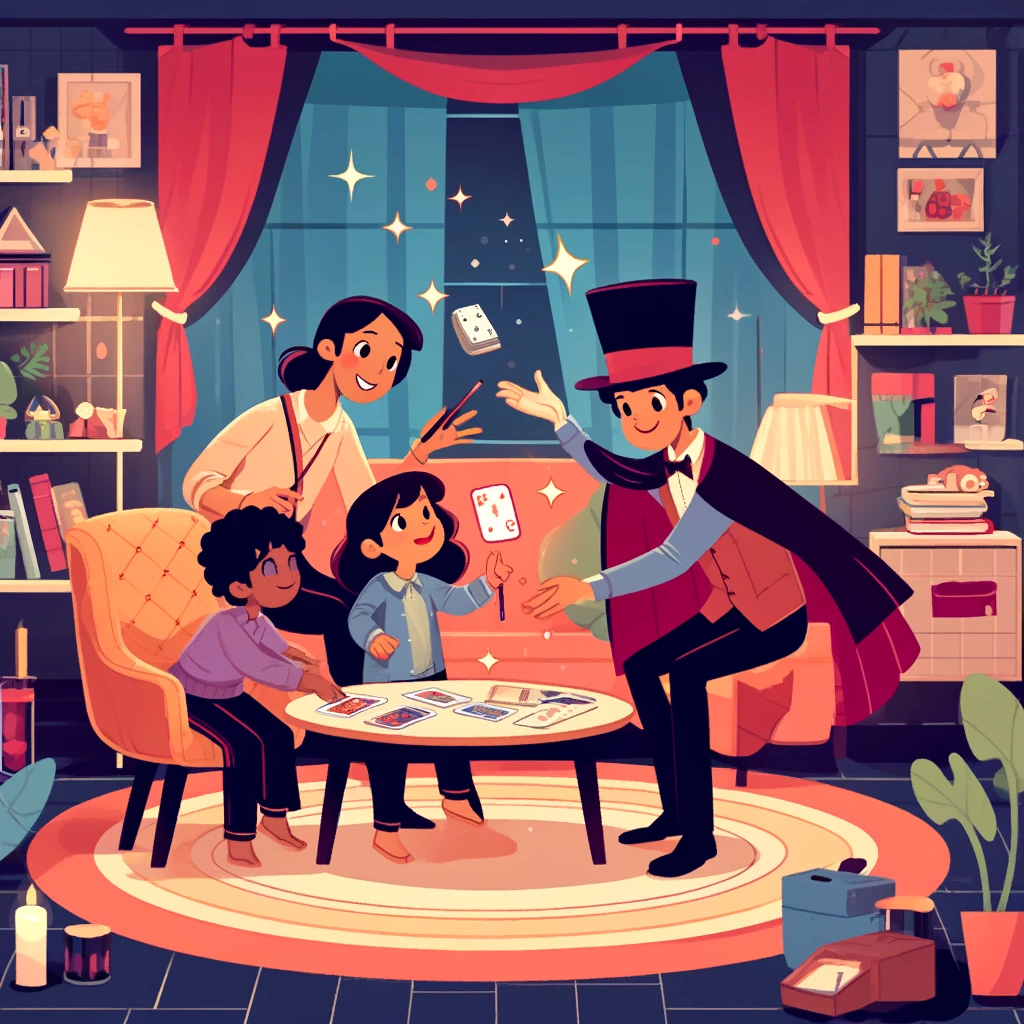
Audience assembled — the other parent, grandparents in person or by video call, the dog as required. Each magician performs their set with full theatre — introduction, patter, pause, reveal, bow. Gasps are contractual. Afterwards, the audience's guesses get met with the guild smile and nothing else — the secret-keeping in the face of direct questioning is the evening's real performance, and they will be superb at it.
Make it fit your kids
Audience, gloriously — the demographic that gasps at the magnetic pencil every single time. Their own trick is the disappearing biscuit, self-taught.
The self-working card trick is their tier — the maths never fails them, and the oath-keeping becomes a whole identity. Patter arrives naturally and at volume.
The coin vanish rewards their patience and the mirror work shows them practice paying off in days. This is the age the library magic book gets devoured and a show gets charged for.
Sleight of hand proper — online tutorials, card flourishes, the slow grind of muscle memory. Magic at this age is a legitimate craft with a community; the family show is their off-Broadway.
A deck of cards and a coin from the jar — the whole academy costs nothing, and the library's magic books extend the syllabus for free when the first three tricks wear in.
If it’s going really well
- The library raid — every library has a magic shelf; three new tricks per fortnight is a term of shows.
- The birthday booking — the magician performs a paid set (rate — cake) at the next family gathering.
- Big illusion night — the family builds one classic together (the vanishing sibling via the blanket lift) for the grandparents' visit.