Create a Family Cookbook
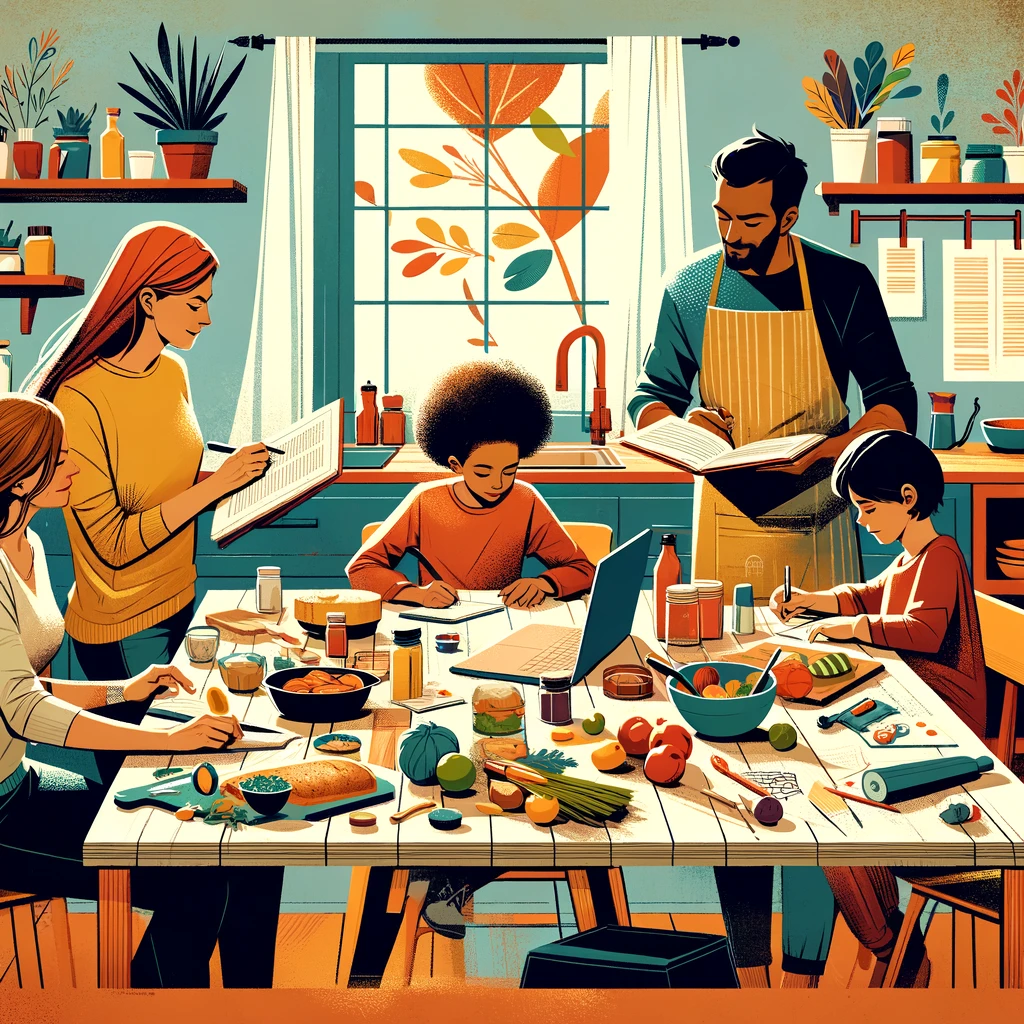
A whole-day plan that produces an heirloom. Morning is recipe-gathering — raiding memories, phoning relatives, writing up the dishes your family genuinely eats. Midday is cooking one of them for lunch, photographed for the book. Afternoon is writing, illustrating and binding the first edition.
Last updated
Before you start
Every family has a cookbook; it's just usually stored in three heads and a stained notebook. This day gets it onto paper before the details drift — and the phone calls to grandparents for their recipes are quietly the best part, because "how much flour, Granny?" turns into twenty minutes of stories nobody would have asked for directly.
The editorial rule that makes the book yours: record the real versions, not the respectable ones. The pasta thing with the crisps on top goes in. The sauce that must be stirred with the specific spoon goes in, spoon documented. A cookbook of what you actually eat gets used and argued over for decades; a book of aspirational recipes gets shelved by August.
How the day goes
The editorial meeting
List every dish the family actually eats — everyone contributes, nothing is too small ("the good toast" qualifies). Then the phone calls — each kid rings a relative and interviews them for one recipe, asking how much, how long, and when did you first make it. That last question is the book's secret ingredient.
The test kitchen
Choose one recipe from the morning's haul and cook it together for lunch — everyone gets a station, and one kid is the documentary photographer. Measure things Granny never measured and write down what "a bit" turned out to mean. The book's version now has your amendments in the margin, which is how family recipes have always worked.
Eating the archive
Lunch is the recipe, obviously. Rate it, note the verdicts in the book ("Dad had thirds — recipe confirmed"), and photograph the finished dish before it's ruined. Discuss which recipe goes on the cover — this argument may outlast the meal.
The scriptorium
Everyone writes up recipe cards — title, who it belongs to, ingredients, method in their own words, and a drawn portrait of the dish. Little kids illustrate; big kids transcribe the phone-call recipes. Sections emerge naturally — breakfasts, dinners, cakes, "things only we eat".
Binding and launch
Order the pages, number them, make the contents page and the cover — title, authors, edition number (first, obviously). Bind with string or treasury tags. Then the launch reading, where each author presents their page, and the book takes its permanent place in the kitchen where it will actually get cooked from.
Make it fit your kids
Chief tasters and illustrators. Their drawn interpretation of spaghetti belongs on a page of its own, and their job at lunch is stirring anything cold.
Recipe-card authors in their own handwriting, spelling gloriously intact — do not correct "sosigis". They also run the ratings system with total seriousness.
Lead interviewers and transcribers — they can hold a real phone conversation with a grandparent and capture a recipe accurately, amendments and all. Give them the contents page and the section logic too.
Editor-in-chief or head of photography. A teen with a phone camera and opinions about lighting produces a book you'd genuinely give as a gift — which, at Christmas, you should.
The book is paper, string and pens you own; the lunch is a meal you'd have made anyway. This is a genuinely free heirloom — the only spend is optional photocopying for the grandparent editions.
If it’s going really well
- The annual second edition — new recipes, updated verdicts, a foreword by the youngest.
- Photocopy and post editions to every contributor grandparent — the returning phone calls are the royalty payment.
- One page left deliberately blank at the back for the next family recipe that doesn't exist yet.