Family History Project
A whole-day plan that turns genealogy into a detective case. Morning is evidence-gathering — the photo box, old documents, and recorded phone interviews with the oldest relatives available. Afternoon is building the tree and the timeline, then presenting The Findings at the family briefing.
Last updated
Before you start
Pitch this as a detective case, not a history project — same activity, entirely different level of buy-in. The case: who are we, where did we come from, and what's the best story nobody's told us yet? The evidence is in the photo box, the loft paperwork and — richest of all — the memories of the oldest people in the family, who are one phone call away and generally thrilled to be asked.
The thing to know going in: the tree is the skeleton, but the stories are the point. A chart of names bores everyone by noon. "Your great-grandad kept pigeons and once cycled forty miles for a dance" is what the kids will repeat for years. Chase stories; file names and dates as you go.
How the day goes
Opening the case
Start with what the household knows — map everyone's names, parents, grandparents on sticky notes, and watch how fast you hit "actually, I'm not sure". Those gaps are the case list. Each detective claims a mystery — where Nana was born, what great-grandad did in the war, why one branch moved cities.
The witness interviews
Phone the elders, recorder on, kids asking. Prep five questions but let the answers wander — the wandering is the good stuff. Ask for specifics kids love — first job, naughtiest thing done at school, what sweets cost. One call per relative, fifteen minutes, and warn them in advance so they can enjoy preparing.
The archive lunch
Sandwiches over the photo box. Every unidentified face goes in a "who is this?" pile for the next grandparent call — solving the pile is a case within the case. The best-dressed ancestor and the best-looking dog get formally awarded.
Building the wall
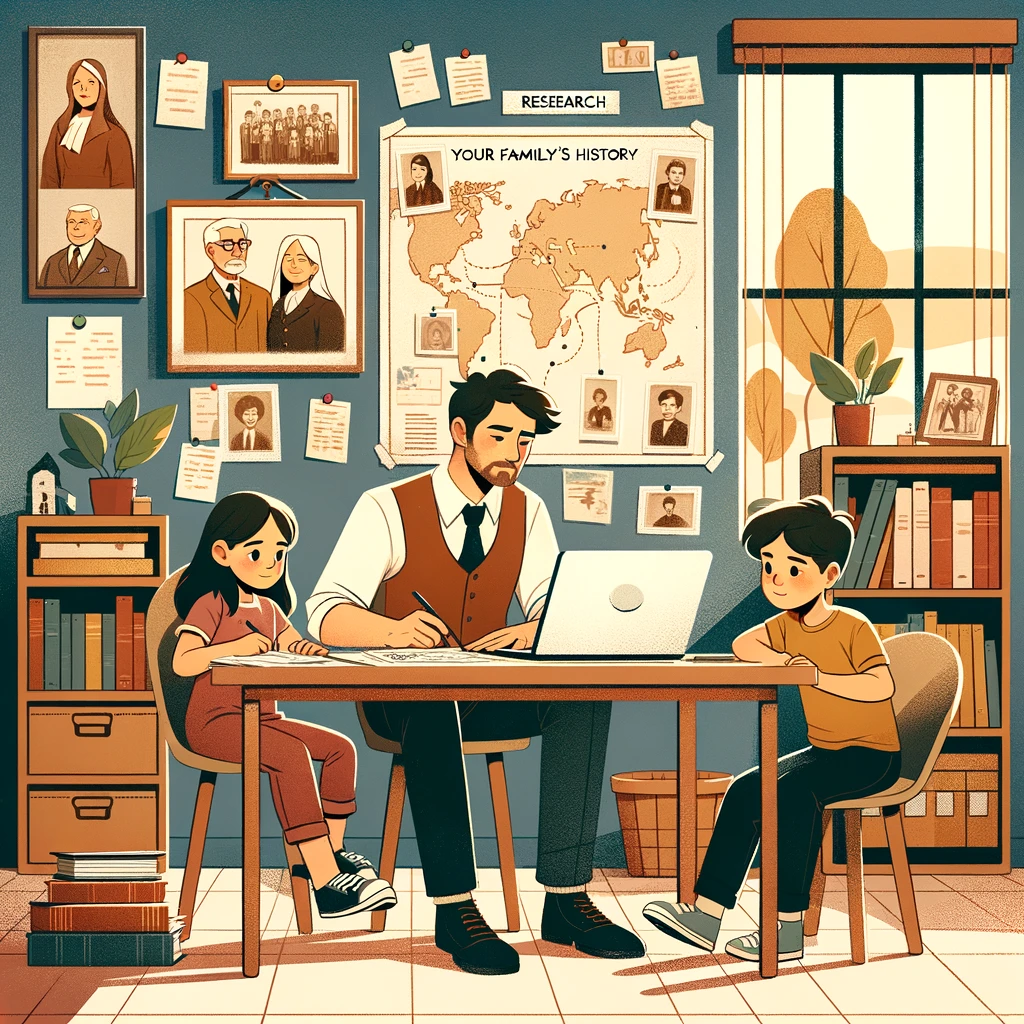
The tree goes up on big paper — names, dates where known, photos or drawn portraits pinned to each. String links siblings and marriages; sticky notes mark unsolved gaps. Alongside it, the timeline — family events on one line, world events they lived through on another. The moment a kid sees Nana's birth next to a historical event they know is when it all clicks.
The findings
Formal case briefing — each detective presents their mystery, their evidence and their best story to the assembled family. Unsolved cases stay on the wall, flagged for future interviews. Photograph the wall, save the recordings somewhere real, and note the follow-up questions — there are always follow-up questions.
Make it fit your kids
Portrait artists — they draw the ancestors nobody has photos of, from description. Their gallery goes on the wall with full attribution and zero corrections.
Question-askers on the calls (grandparents melt) and chief pinners on the wall. The naughtiest-thing-at-school question is officially theirs.
Lead detectives — they run interviews, cross-reference dates, spot the contradictions between accounts, and argue about evidence like proper historians.
Archive digitiser and documentary maker — scanning photos, cutting interview audio, building the tree in a spreadsheet or app if they'd rather. The output becomes the family's permanent record, and they know they built it.
Entirely free — the archive already exists in your loft and your relatives' heads. The wall is the back of leftover wallpaper and the string is from the junk drawer.
If it’s going really well
- The unsolved cases file — one new interview or record search each visit to the grandparents until the gaps close.
- Turn the best story into an illustrated book or short film for the relative it belongs to.
- A migration map — string lines across a real map tracing every journey the family made to end up at your kitchen table.