Backyard Archaeology
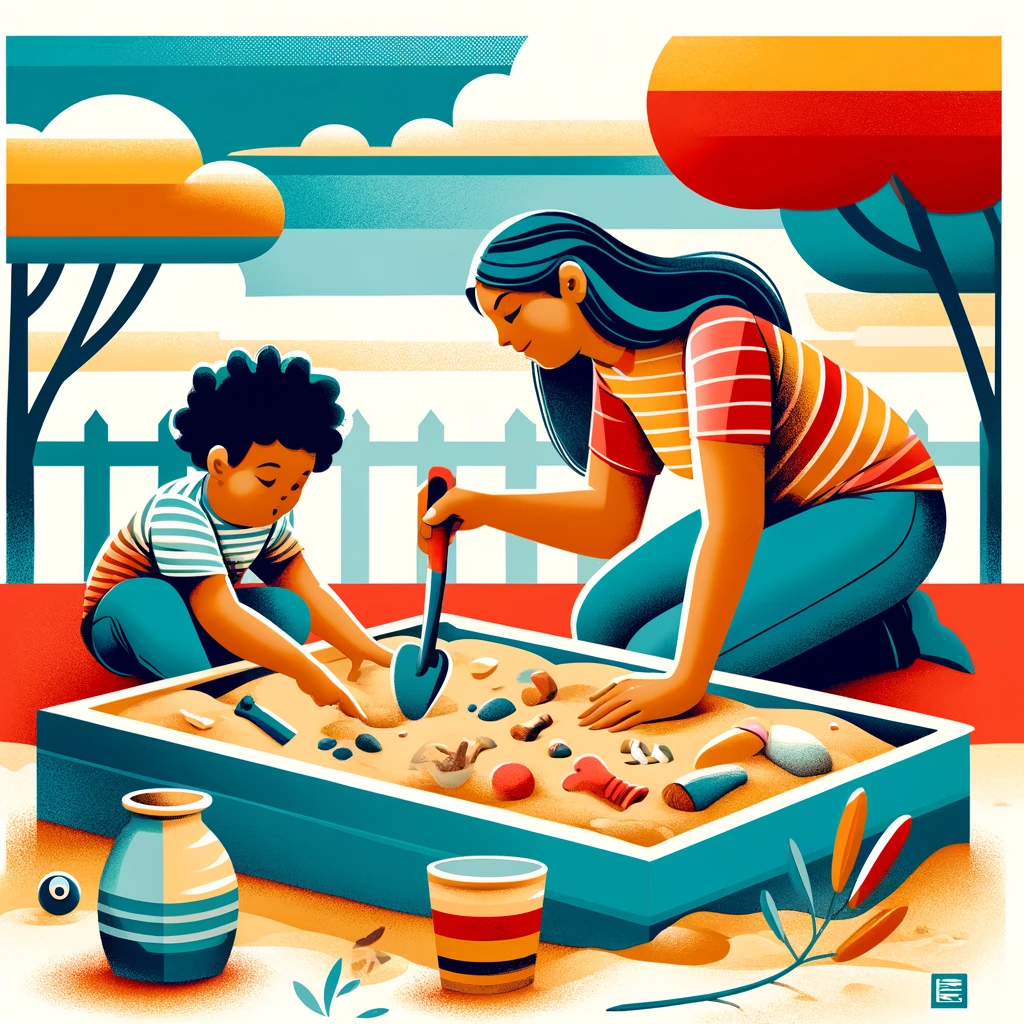
Half a day of genuine archaeological method on a planted site — you seed a corner of garden or a sandpit with "artefacts" from a lost civilisation, and the kids excavate with real technique — string grids, careful layers, brushes, and a finds log. Ends with a museum exhibition of the discoveries.
Last updated
Before you start
The honest secret is that you're the ancient civilisation — the night before or while they eat lunch, you bury a culture's worth of artefacts (broken-plate "pottery" with edges dulled, coins, a small figure, shells, a scroll in a jar) in layers in a corner of garden or the sandpit. The staging takes twenty minutes; what the kids do with it is entirely real.
The method is the activity: grid the site with string, dig in layers, brush don't yank, and log every find — what, where, how deep. A find snatched from the ground is treasure; a find logged in a grid square is evidence, and kids feel the difference immediately. The deeper artefacts should be "older" (you buried them so) — stratigraphy arrives as an idea without ever being announced as one.
How it goes
The staging
Bury the civilisation in believable layers — everyday items shallow, precious things deeper, the scroll jar deepest of all. The scroll is your masterstroke — a tea-stained note in invented script or pictograms that the team must decipher at the end. Vary the grid squares so every digger hits finds; an empty square teaches patience, but three empty squares teaches quitting.
Site setup
Brief them as a dig team — a real site, unknown civilisation, professional standards. Grid the site with string into squares, one digger per square, and issue the kit — trowel, brush, finds tray. The rule that makes it archaeology, stated once and enforced always — nothing leaves the ground fast; brushing beats pulling.
The excavation
Dig in layers, sieve the spoil (the sieve catches the beads everyone missed), and log each find in the notebook — square, depth, description, digger. Watch the behaviour change as the log fills — they start predicting ("deeper is older, so the good stuff's down there") which is hypothesis formation happening in a sandpit. The scroll jar's discovery should be the crescendo; let its finder open it before the full assembly.
The finds lab and museum
Finds washed with toothbrushes, sorted, and interpreted — what WAS this civilisation like? Every theory is entertained and tested against evidence ("they had money, we found coins — but why buried?"). Then the museum — finds displayed on labelled trays, the scroll's translation presented, and visitors (any available adult) toured through by the archaeologists. The interpretations will be spectacular. Do not correct them.
Make it fit your kids
Their square is the shallow one, seeded generously — every scoop hits treasure. They sieve with supervision and wash finds with the deep focus of small people given water and a toothbrush.
The method takes — they'll brush, log and theorise with total professional identity. The scroll finder should probably come from this band; the awe is at its peak here.
Site directors — they run the grid, keep the log properly, and spot that the stratigraphy tells a story. Let one of them stage the NEXT dig for younger siblings; designing a believable site is the advanced class.
They'll see through the staging instantly, so recruit them as co-conspirators — civilisation designers, script inventors, museum curators. Building the lie is more fun than believing it, at their age.
Everything comes from the house — coins from the jar, a plate the drawer had already given up on, and the sandpit that was there anyway. Total spend nil; total kitchen sieve losses, one.
If it’s going really well
- The dig report — findings written and illustrated, museum-labelled, filed with the family archive.
- A real-finds walk — beaches, ploughed field edges and molehills yield genuine pottery and clay pipe in much of the country; the method transfers.
- The reciprocal civilisation — kids bury a culture for the adults to excavate, and judge your technique harshly.