Sensory Bins
A practical sensory bins guide for kids with fast setup templates, age variation notes and cleanup-aware material choices. Ideal for rainy mornings and quiet-time resets.
Last updated
Before you start
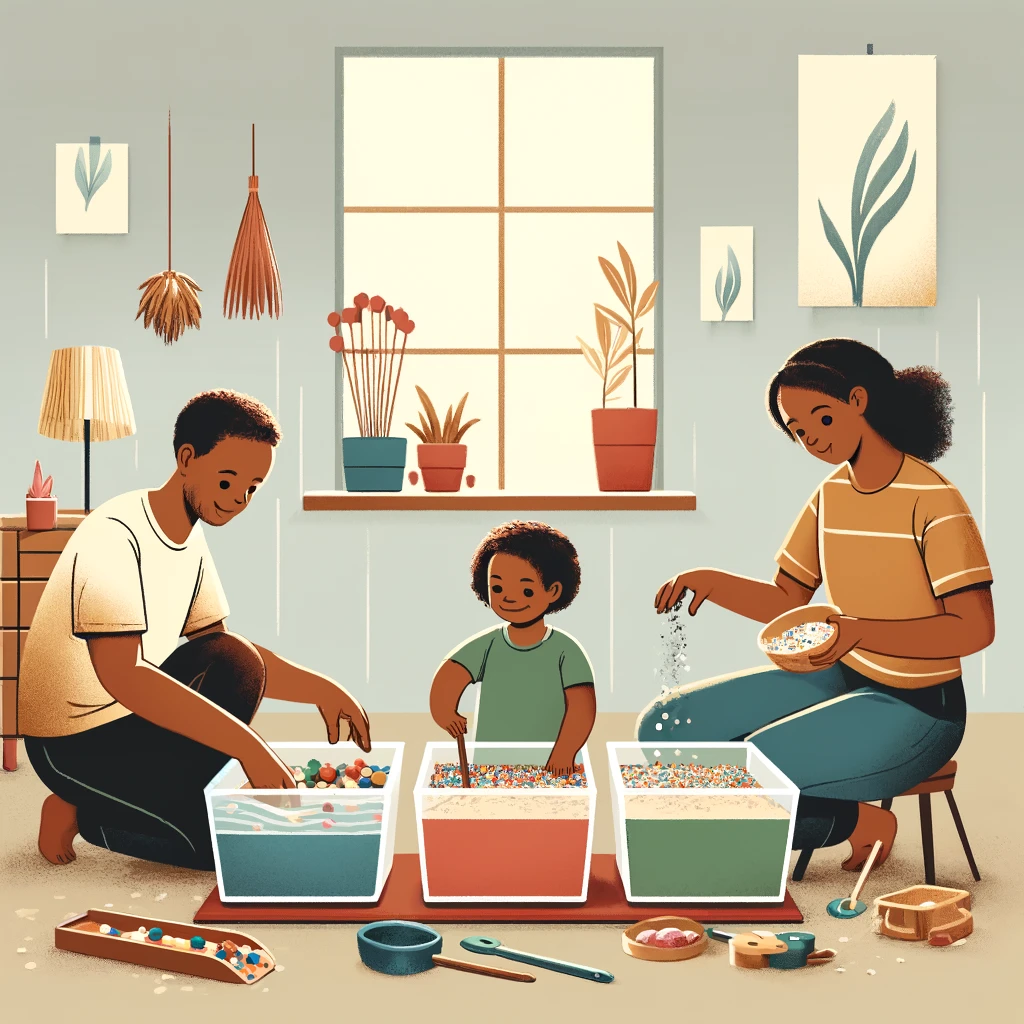
A sensory bin is a contained world for hands — a deep tray or washing-up bowl filled with something pourable, plus tools that move it and treasures that hide in it. The classic fill is dry rice (pours like water, sweeps like a dream); oats, pasta shapes and lentils rotate the texture. What looks like idle scooping is a toddler running their own physics programme — volume, weight, flow rate — with the fierce concentration adults pay yoga instructors to approximate.
The one setup decision that decides the hour: the bin lives on a sheet, and the sheet is the border. Announce the border, sweep spills back with the dustpan brush that lives beside the bin, and the mess stays a five-minute sweep instead of a fortnight of crunching underfoot. A bin without a border teaches the whole family why sensory bins get abandoned.
How it goes
The build
Sheet down, bin on, fill in — pouring the rice from height is the opening ceremony and the toddler does it. Tools arranged, treasures buried while they watch (the watching loads the game), and the border rule announced in the tone reserved for real laws.
Free play
Step back further than feels natural. The programme runs itself — pour, bury, find, transfer, repeat — and interruptions to teach or tidy break a concentration that's doing exactly what it should. Sit adjacent with your own scoop; parallel play beats supervision and the quiet is part of the product.
The prompts
A stalled bin restarts with one small change, not a lecture — a new tool dropped in wordlessly, a treasure re-buried while they watch, the funnel demonstrated once and surrendered. The best prompt is the egg cup — too small to be efficient, it forces the precision pour, which is the fine-motor gym hiding in the game.
Close of play
The find-them-all finale — every treasure recovered and counted back into its tub, which converts tidying into the game's last level. Fill swept back to the bin (the toddler drives the dustpan brush; this is a legitimate skills session), lid on if the bin has one, and the whole rig stored ready — because the bin that's easy to redeploy gets redeployed, and the habit is the value.
Make it fit your kids
The heartland — pour, bury, find at full commitment. Rotate the fill monthly and the bin stays box-fresh; add water beads or cooked spaghetti (outdoors) for the sensory deep end.
The bin becomes a world — construction sites, dinosaur digs, potion kitchens. Small-world figures and a narrative brief keep it running well past the age anyone expects.
They've graduated — but they build the best bins for younger siblings, engineering treasure-hunt layers and theming fills, which is design work wearing a babysitting hat.
No version survives this age and none is offered — though the kinetic-sand desk tray for exam season is the same nervous system trick in adult packaging, and it works.
A bag of value rice and the recycling's tubs and pots — under a pound all-in, and the fill lasts months of sessions in a lidded box between deployments.
If it’s going really well
- The themed rotation — a dig bin (sand, brushes, buried "fossils"), an ice bin (summer), a Christmas bin (red lentils, gold buttons, cinnamon stick).
- The sorting upgrade — muffin tins beside the bin and suddenly it's colour-and-size classification with no worksheet in sight.
- Water play graduation — the same bin, warm water, cups and a towel border; the bath's daytime cousin.