Knitting for Beginners
Half a day launching knitting properly — finger-knitting for the youngest, needles and garter stitch for everyone else, and a first project sized to actually finish (teddy scarf, not human scarf). The rhythm is the product; the scarf is the receipt.
Last updated
Before you start
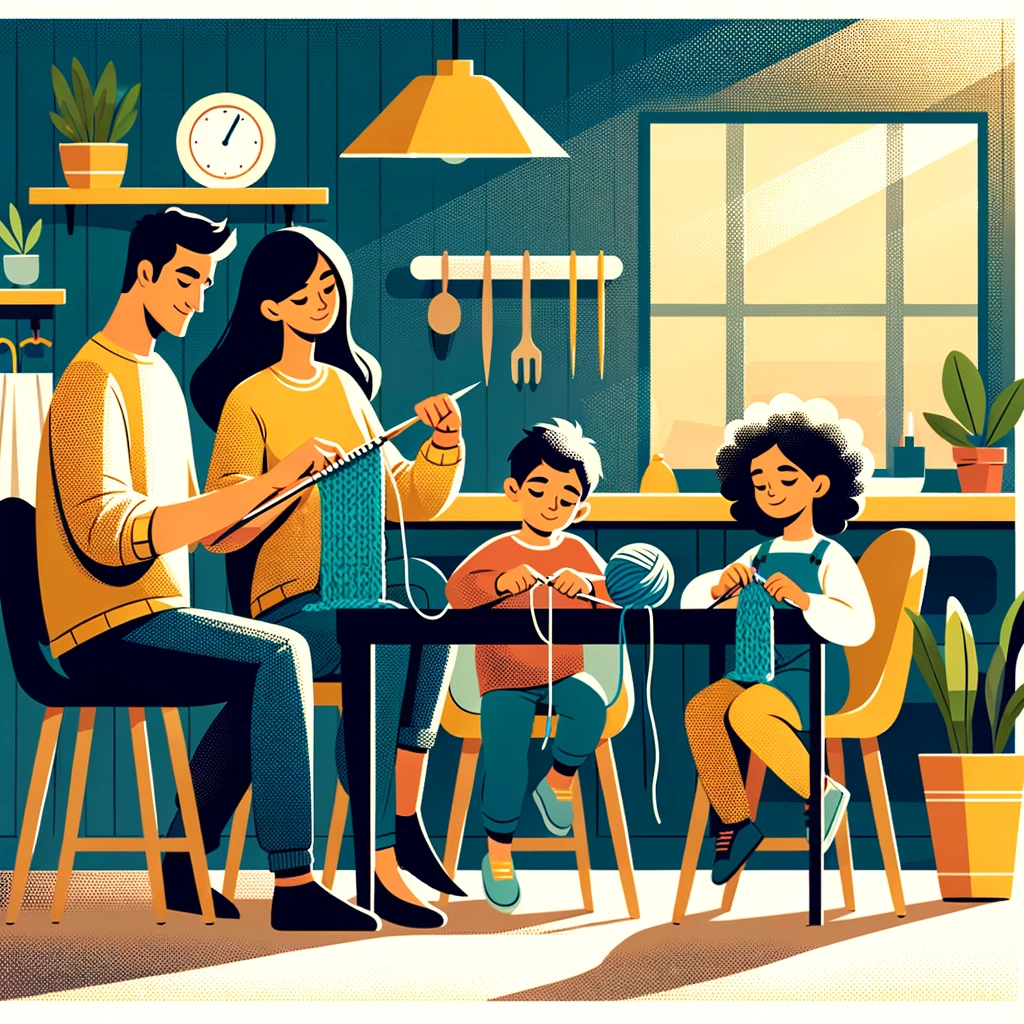
Knitting's beginner trap is ambition — the human-sized scarf that becomes a guilt object by February. Start with a project that finishes today: a scarf for a teddy is twelve stitches wide and twenty minutes of knitting once the hands click, and a finished object on day one is what turns a taught skill into a hobby.
The teaching order that works: finger-knitting first for anyone under seven or anyone frustrated, needles and the knit stitch only when hands are ready. Finger-knitting produces metres of woolly rope with zero equipment and full technique-dignity; needles come with the classic rhyme (in through the front door, round the back, through the window, off jumps Jack) which has taught more knitters than any video. Big needles, chunky wool, light colours — every one of those choices makes stitches visible and mistakes findable.
How it goes
Wool appreciation
Wind a hank into balls if any need it — genuinely one of the great overlooked kid jobs, best done as a two-person swift-and-winder team. Everyone picks their wool and meets the client (the teddy) whose scarf measurements get taken with ceremony. A project with a client has a deadline and a fitting; a practice square has neither.
Finger-knitting bootcamp
Everyone starts here regardless of age — over, under, lift, repeat, and metres of rope emerge fast enough to feel like magic. The youngest stay here happily all afternoon (finger-knitted rope becomes bracelets, snakes, and infinite dressing-gown cords); older hands graduate the moment they're bored, which is the correct graduation criterion.
Needles and the rhyme
Cast on twelve stitches for each knitter (do it yourself for beginners — casting on is week-two content), then the knit stitch via the rhyme, hand over hand at first, then hands off. The rhythm arrives somewhere around row four — visible as the shoulders drop — and conversation starts happening over the top of the knitting, which is the actual ancient point of the craft. Dropped stitches get rescued by you without drama; row counts are nobody's business.
The fitting
When the scarf spans the client's neck generously, cast off (yours again), weave the ends with the darning needle, and hold the fitting — teddy scarfed, knitter photographed with client, garment admired from all angles. Send the photo to the grandparent who taught or should have. The needles go in a jar with the wool, visible, because visible knitting gets picked up on Tuesday and drawer knitting doesn't.
Make it fit your kids
Ball-winders and wool-holders with honour — actual knitting waits, but finger-knitting's simplest over-under works for some four-year-olds in short, triumphant bursts.
Finger-knitting champions who may graduate to needles late in the session — follow their frustration meter, not the plan. The teddy fitting is theirs regardless of who knitted what percentage.
Needles from the start, rhythm by row six, and a genuine finished object today. Next session teaches casting on and purl; this one teaches that their hands can learn things.
Knitting is quietly cool again and they may know it — chunky-wool projects (headbands, phone socks) finish fast, and a teen knitting in front of a series has discovered the craft's actual operating mode.
One ball of chunky charity-shop wool and needles borrowed from the family knitter — the whole launch runs under a pound if the grandparent network is functioning as designed.
If it’s going really well
- Week two — casting on, purl stitch and the human-scale project now the hands have proof.
- The wardrobe department — teddy's scarf begets teddy's blanket, hat and (ambitiously) jumper; small clients, fast fashion.
- Knit night — a standing sofa fixture where rows accumulate over episodes, exactly as the craft intended.