Family Yoga Session
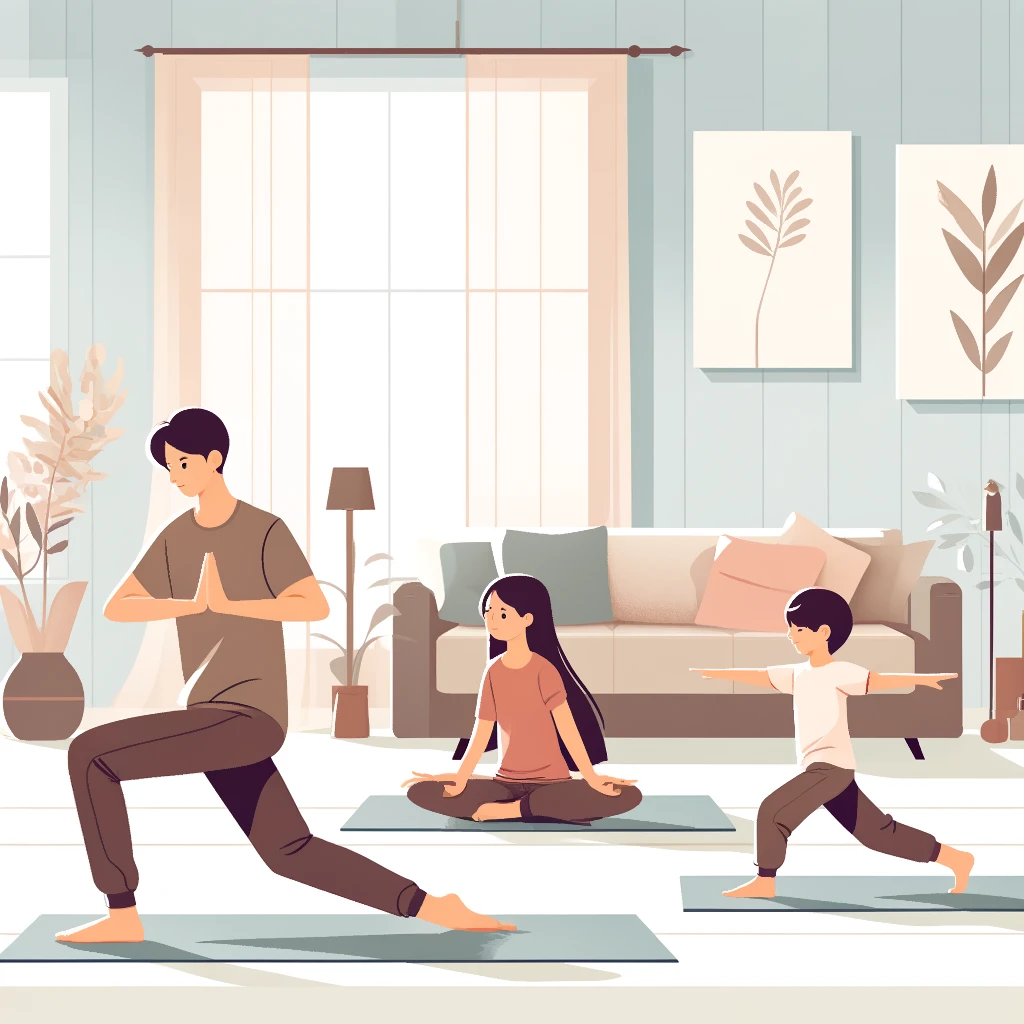
A calm hour of yoga built for mixed bodies — warm-up done together, partner poses where a parent is furniture, the group balance challenge, and the long guided rest that adults secretly need most. No experience required on any mat.
Last updated
Before you start
Family yoga differs from kids' yoga in one structural way — the adults are IN it, not running it, and the session is built from poses that use that fact. Partner work is the heart: back-to-back chairs, the double boat with held hands, a parent's downward dog as a tunnel with traffic. Two-body poses turn balance into cooperation, and cooperation into the giggling that is — despite appearances — the session working.
The honest secret of the hour: the final rest is for the adults. Kids get stillness practice; parents get the only five horizontal minutes of the week with the family present and silent. Guard it accordingly — the guided journey read slowly, the room warm, and nobody up until the story lands its boat on the shore.
How it goes
Arriving
Mats in a circle or facing pairs, and the warm-up done as follow-the-leader with the leadership rotating — arm circles, cat-cow with sound effects, the sun salutation taken at storybook speed. The rotation matters; a four-year-old leading three adults through their own invented stretch sets the session's real hierarchy, which is none.
Partner works
The two-body catalogue — back-to-back chair (sit into each other, stand together; harder and funnier than it sounds), double boat (soles together, hands held, the wobbling IS the pose), parent-as-bridge with small traffic passing under, and the seesaw forward-folds. Swap partners each pose so every pairing happens — the teen-and-toddler boat is the photo the session exists for.
The family tree
Everyone in tree pose at once, holding hands in a line or circle — the group balance where one wobble travels the whole forest and the save travels back. Three attempts, best hold counted aloud, ceremony on the record. This is the session's summit and its metaphor, and nobody needs the metaphor explained.
The long rest
Everybody flat, lights low, and the journey read slow — the boat, the cloud, the warm sand, any of them, delivered at half the speed that feels right. Kids settle in waves; adults go under fast and deny it after. End with slow wiggles, sitting up like morning, and the closing ritual of one word each for how they feel — the words are worth collecting.
Make it fit your kids
Orbit members — they do forty seconds per pose, tunnel through every bridge available, and land the rest phase only if it comes with the teddy-on-tummy job. All of this counts.
Full partners — the chair, the boat and fierce forest-hold pride. They'll lead the warm-up with invented poses of genuine quality and police the quiet of the rest phase like wardens.
They hold real poses and want harder ones — give them crow attempts on cushions and the reader's chair for the guided rest, where a twelve-year-old's slow narration is the session's best audio.
The scheduling matters more than the sell — offered as a standing Sunday slot rather than an event, it becomes the week's one unarmoured hour. Their double-boat with the smallest sibling is the pose that gets them back next week.
Free entirely — towels for mats, the rug for the forest floor, and the guided journey invented on the spot with a boat and some weather.
If it’s going really well
- The standing Sunday slot — same hour, same mats; the fixture is the practice.
- Pose cards drawn by the family — the deck shuffled and dealt as each week's sequence, invented beasts included.
- The kids-only version for restless weekday afternoons — shorter, animal-themed, sleeping lions at the end.