Create a Vision Board
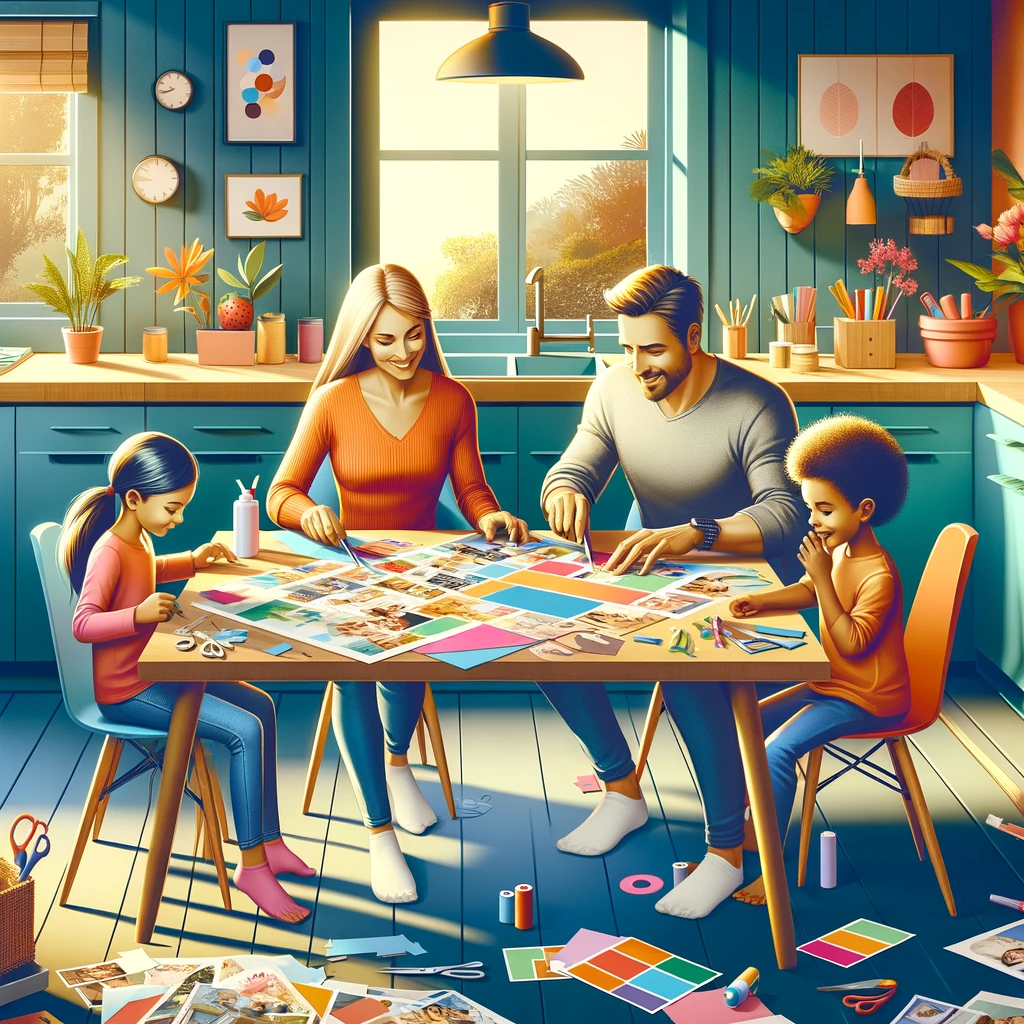
Half a day of cutting, sorting and gluing hopes into visible form — each person builds their own board around real wants (learn to swim, see the sea, get a dog, worry less), with adults making theirs alongside. The conversation while cutting is the actual activity; the board is its receipt.
Last updated
Before you start
Strip the manifestation gloss off and a vision board is a genuinely good exercise — what do you actually want this year, and what would it look like? — made concrete with scissors and glue. For kids it works because wanting is easy but articulating is hard, and pictures bridge the gap; a seven-year-old who can't answer "what are your goals" can absolutely point at a dog, a swimming pool and a bunk bed.
The rule that gives it substance: every picture earns its place by being said out loud. "Why this one?" — asked gently, answered however — is where the board becomes a conversation about the year ahead, and where parents learn things ("I want to not be scared of the deep end" arrives via a picture of a swimmer, not via being asked directly). Adults make boards too, honestly; a parent gluing a picture of a tidy shed and eight hours' sleep is modelling the whole exercise.
How it goes
The harvest
Magazines spread across the table and everyone hunts — not for their board yet, just for anything that pulls — places, animals, colours, words in nice type. Tearing beats cutting at this stage; piles accumulate. The murmured commentary ("who's having this horse?") is the sound of the afternoon working.
The sort
Each person sorts their pile with the question attached — what would make this year great? Piles shrink honestly; the horse survives, the sports car gets ceremonially returned. Categories emerge without being imposed — things to learn, places to go, feelings to have more of. A word cut from a headline (BRAVE, SUMMER, DOG) anchors many a board.
The making
Glue and arrange — centre image first (many go family photo; some go dog; both are correct), everything else orbiting. The out-loud rule runs throughout — each picture placed gets its sentence. No interpreting kids' choices for them, no upgrading their ambitions; the board is theirs, including the section that's just nice biscuits.
The hanging and the check-back
Boards presented — a one-minute tour each, applause standard — then hung where mornings happen — bedroom doors, the kitchen wall, above the shoe rack. The bit that makes it more than craft — a check-back date set now, three months out, written on the board's corner. The dog remains unpurchased at check-back, historically, but the swimmer has met the deep end by then, and the board gets to say it saw it coming.
Make it fit your kids
A stick-what-you-love collage, no year-question attached — dogs, diggers, biscuits, done. Their board carries the household's purest editorial vision and hangs at their height.
The question lands here in concrete form — swim, bike, rollercoaster, pet. The out-loud sentences are gold at this age; write the best one on the board's back, dated.
Boards get private-ish — offer the option of a section that isn't toured, and honour it. Their check-back date matters most; a hope witnessed at this age and then achieved builds real machinery.
Rebrand as mood board and it's suddenly their native medium — aesthetic, music, plans, a corner of actual ambitions smuggled in among the styling. Theirs hangs inside the wardrobe door, and the three-month check-back happens sideways, over a lift somewhere, board unmentioned.
Free wherever junk mail exists — brochures, catalogues and one glue stick cover a family, and cereal-box card outperforms bought corkboard anyway.
If it’s going really well
- The quarterly check-back as standing ritual — pictures of things achieved get a gold star; the board becomes a scoreboard.
- A family board alongside the personal ones — the year's shared hopes (the trip, the tent, the kitchen table fixed) negotiated and glued jointly.
- Last year's board reviewed each New Year before the new one gets made — the archive becomes its own tradition.