Candle Making
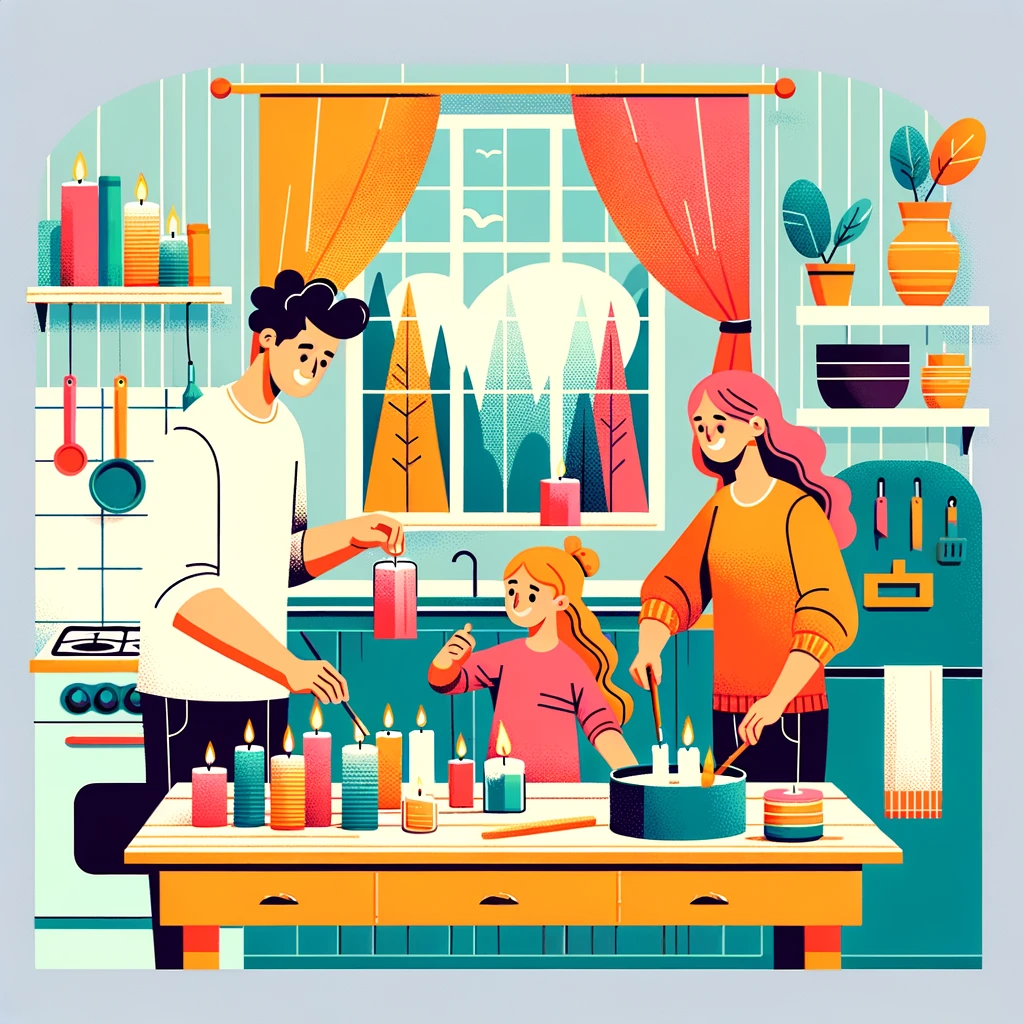
Half a day of small-batch candle making for households with older kids — container candles in charity-shop teacups, wax melted in a bain-marie, scent and colour debated like perfumers. The pour is adult work; everything around it belongs to the makers.
Last updated
Before you start
Candle making splits cleanly into kid work and adult work, and running it honestly along that line is what makes it work as a family craft. Kids own the creative decisions — containers, colours, scent blends, labels; adults own the melt and the pour, because wax is genuinely hot and respect for that is part of the lesson.
The craft's one non-obvious rule: the wick must stand centred and straight while the wax sets, and it will not volunteer to. Two lolly sticks with the wick sandwiched between, laid across the container's rim, is the classic jig. A wandering wick makes a candle that tunnels down one side — annoying to adults, genuinely interesting to kids once you explain why, which is the physics smuggled in.
How it goes
The design meeting
Containers chosen and claimed — the teacup hunt at a charity shop beforehand is a worthy prequel activity. Each maker plans their candle on paper — colour, scent, name (candles get names like "Winter Kitchen" and the naming is half the craft). Wicks get tabbed to container bottoms with a dot of glue or melted wax, then jigged straight between lolly sticks.
The melt
Wax flakes into the jug, jug into the simmering pan — the bain-marie keeps everything below scorching and teaches the double-boiler concept by demonstration. Kids watch the flakes slump and clear with genuine interest; this is materials science at eye level. Colour goes in now, stirred by adult hand while kids call the shade ("more, MORE" — go slower than the committee demands).
Scent and pour
Off the heat, cool for a few minutes (scent burns off in too-hot wax — the thermometer's one job), then fragrance in at the makers' direction, stirred and named officially. The pour is yours alone, slow, to a marked fill line. Kids own the vigil — wicks checked straight, containers undisturbed, the surface watched as it clouds and sets. Setting takes hours; the vigil takes ten minutes and then becomes glancing.
Finishing school
Wicks trimmed to a fingernail's length (long wicks smoke — another smuggled lesson), labels made and tied — name, maker, date, a burn-safely line on the back written by the kids in their best official voice. First light happens ceremonially at dinner, maker's honours. The rest become the year's best gifts — a handmade candle in a teacup outguns most things money buys.
Make it fit your kids
Honestly, this one waits — hot wax and toddlers don't share a kitchen. Their version is decorating a bought candle's jar with stickers at the far table, fully satisfied.
Junior makers with full design authority and zero pour access — they plan, colour-call, jig wicks, run the vigil and tie labels. The line between their jobs and yours holds because it's clear.
The target crew — they can run everything except the melt and pour, and should. Introduce the thermometer as their instrument and the scent-blending as their lab.
Near-full autonomy with you on flame watch — layered colours, scent recipes, small-batch production for gifts or a market stall. This is a hobby with a business model and they will notice that.
A bag of soy flakes and a packet of wicks splits across many candles; containers are free from the back of the cupboard and colour comes from dead crayons. Skipping fragrance halves the cost and the candles still glow the same.
If it’s going really well
- The layer pour — two colours, two sessions, one striped candle worth the patience.
- A scent library — blends tested on paper strips and rated before committing wax to them.
- The winter production run — a dozen teacups in November solves Christmas for the crafty half of the family.